Quick Summary
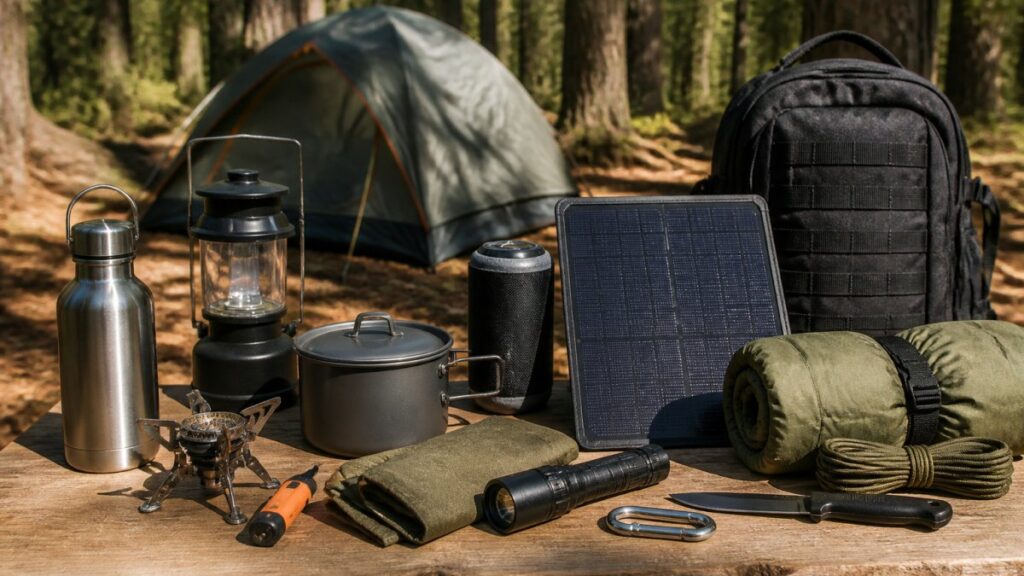
Off grid camping gear needs to keep you safe, fed, warm and dry with no mains power, shops or mobile coverage nearby. Focus on five functions: shelter and sleep, power, water, cooking and food storage, and navigation and safety. Match each item to the conditions you actually face, not the best-case weekend.
- Plan for the cold night, the wet day and the longer walk out.
- Size a power station by adding daily watt-hours and a 20 to 30 per cent margin.
- A compressor fridge can draw more energy than everything else combined.
- Plan around roughly three to four litres of drinking water per person per day.
- Carry a paper map and compass, because electronics can fail.
Table of Contents
- What Off Grid Camping Gear Actually Needs to Do
- Shelter and Sleep: Tents, Swags and Mats That Survive Remote Use
- Portable Power Station for Camping: How to Size Your Off-Grid Power
- Solar Panels for Camping and Keeping Food Cold
- Camping Water Filter and Realistic Water Planning
- Cooking, Navigation and Safety Kit for Remote Trips
- Off-Grid Camping Checklist and Budget Tiers
- Booking Your Off Grid Gear Before Your Next Trip
- Frequently Asked Questions
What Off Grid Camping Gear Actually Needs to Do
Last Updated: October 30, 2026
That changes what you should buy. A tent that is fine at a caravan park can fail in a storm on an exposed ridge.
Most good off-grid kits cover five functions. The first is shelter and sleep, which protects you from weather and ground cold. The second is power, for lights, phones, fridges and communication devices. The third is water, both storing it and making it safe to drink. The fourth is cooking and food storage, and the fifth is navigation and safety, which matters most when you cannot easily call for help.
Weight and packed size also matter. Gear that is durable but too heavy to carry will sit in the garage. Gear that is light but flimsy will fail when you need it.
Where a product’s specifications matter to your decision, check them against the manufacturer’s own listing before you buy.
Watch out: buying for your best-case trip rather than your worst-case trip is the most common mistake.
Shelter and Sleep: Tents, Swags and Mats That Survive Remote Use
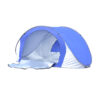
Shelter is the first piece of kit to get right, because it protects you every night.
Sleeping mats matter as much as the shelter itself. For a value-focused comparison, see high-performance camping sleeping mats. Ground cold is the main reason people sleep badly outdoors, and a mat’s insulation rating is more important than its cushioning.
Sleeping mats and cots vary widely in insulation, weight and packed size, so check each model’s specifications with the manufacturer before you buy.
If you carry a canvas swag, confirm its dimensions and weight against your vehicle or pack space before you commit.
Portable Power Station for Camping: How to Size Your Off-Grid Power
A portable power station stores energy in a battery and delivers it through standard outlets and USB ports.
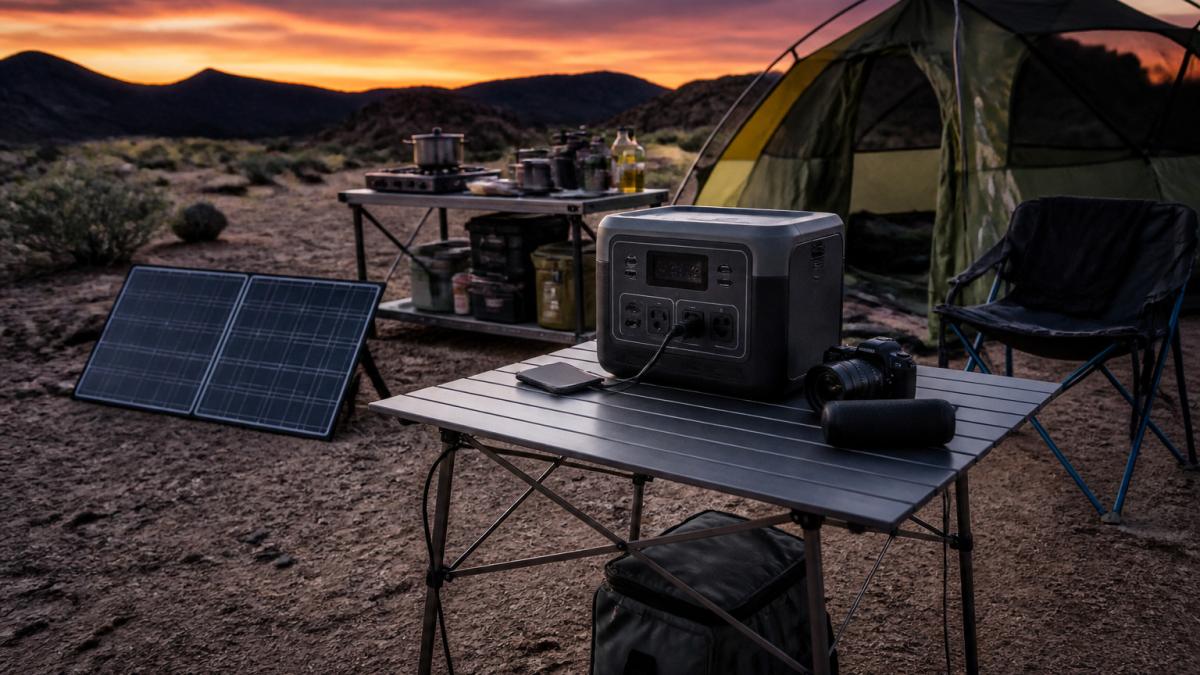
Start with a simple load list. Multiply each device’s wattage by the hours you use it, then add the totals:
- Phone charge: roughly 15 to 20 Wh per full charge
- LED lantern: a few watt-hours per hour of use
- Laptop: 50 to 80 Wh per full charge, depending on the model
- Small compressor fridge: several hundred watt-hours per day, and more in hot weather
- Satellite communicator: small, but budget a few watt-hours per day for standby and messaging
A station rated at 1,000 Wh or more can cover a long weekend for a phone, lights and a laptop. For a deeper comparison of portable power stations for remote use, see portable power stations for remote use.
Battery chemistry matters too. Lithium iron phosphate (LiFePO4) stations generally deliver more usable cycles and hold capacity better in heat than older lithium-ion designs, which is why most current camping power stations use it.
Weight is the other half of the decision. Power stations are heavier than most people expect, so weigh the option against what you can carry or tow.
A power station’s advertised capacity is not the energy you get out of it. Heat, cold and inverter efficiency all reduce what you can actually use, so leave a generous margin in your sums, and test the full setup at home before you rely on it remotely.
Size the battery around your biggest steady load (usually a fridge), add 20 to 30 per cent margin, and match the station’s weight to whether you are carrying it or loading it into a vehicle.
The table below summarises the typical daily energy use of common camping devices, so you can size your power station.
| Item | Typical energy use | Note |
|---|---|---|
| Phone charge | 15 to 20 Wh per full charge | Roughly one full charge |
| LED lantern | A few Wh per hour | Low draw for lighting |
| Laptop | 50 to 80 Wh per full charge | Depends on the model |
| Small compressor fridge | Several hundred Wh per day | Higher in hot weather |
| Satellite communicator | A few Wh per day | Covers standby and messaging |
| Safety margin | 20 to 30 per cent | For losses, cold and cloud |
Solar Panels for Camping and Keeping Food Cold
Solar panels recharge your power station during the day, so the two should be sized together. A small foldable panel of a few hundred watts can top up devices and a modest battery on a sunny day, but output drops sharply under cloud, in winter and when the panel is shaded or badly angled.
For a campsite that gets full sun, angle the panel towards the sun and keep it clear of shadows from trees or your vehicle. Flexible panels are light and easy to stow, while rigid panels are more efficient per square centimetre but harder to carry.
Keeping food cold is where solar and power planning meet. A compressor fridge draws a steady amount of energy, so you need enough battery and enough sun to cover it each day.
Keep food and water separated, and store them in shade, since heat is the main cause of spoilage.
Camping Water Filter and Realistic Water Planning
Water is the item campers most often underestimate. Plan around a daily requirement for drinking, cooking and washing, and carry enough to cover the gap between water sources, with a margin for delays.
A realistic starting point for planning is around three to four litres per person per day for drinking and cooking in mild conditions, rising to five or more in hot weather or with heavy exertion. Add washing water on top of that. For a two-person, three-day trip with no reliable source, that is roughly 18 to 24 litres before washing, which is why most remote campers plan around refill points rather than carrying everything.
A camping water filter lets you treat stream or lake water on the trail, which reduces how much you must carry. Choose a filter rated for the bacteria and protozoa common in the water you will use, and check its flow rate and filter lifespan.
Storage is the other half of the system. Rigid containers are easier to fill and clean but bulky; collapsible containers pack down and suit vehicle-based trips. Carry a dedicated dirty-water container and a separate clean one so you do not cross-contaminate.
Match your water plan to the trip type. Car camping and overlanding can carry large rigid containers and a gravity filter; backpacking needs a lightweight pump or squeeze filter and a plan to refill at known sources. Cold weather increases drinking needs less than heat, but melting snow for water is fuel-hungry, budget stove fuel accordingly.
Filtering removes most microorganisms, but it does not remove every contaminant, so where water quality is uncertain, boiling or chemical treatment is the safer backup. Carry spare cartridges, because a blocked filter at the end of a long day is a common trip problem.
Low-impact practice belongs in the water plan too. Use biodegradable soap well away from watercourses, strain greywater and scatter it, and pack out or bury human waste according to local land-manager rules. In remote areas, that discipline is part of keeping the places you camp worth returning to.
Cooking, Navigation and Safety Kit for Remote Trips
Cooking gear needs to be reliable, light and simple to fuel. Browse our guide to tough outdoor gear built for harsh conditions when choosing durable kit for remote trips.
For lightweight cooking on long hikes, a compact cooking set that nests and weighs little will save strain on your back. See our lightweight cooking set options for long hikes.
Navigation and communication matter most when mobile coverage fails. A satellite communicator can send messages and an SOS from remote areas. Check any subscription costs before buying.
For day trips, a packable day pack lets you carry essentials without the full load.
Your safety kit should include a first-aid kit, a headlamp with spare batteries, a multi-tool, fire-starting tools, and emergency shelter.
Off-Grid Camping Checklist and Budget Tiers
Use this checklist to confirm you have covered the essentials before you leave:
- Shelter, pegs and guy ropes suited to expected weather
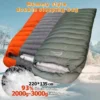
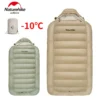
- Sleeping bag rated for the lowest overnight temperature
- Sleeping mat with adequate insulation
- Power station sized to your daily watt-hour needs, plus margin
- Solar panel and charging cables
- Water storage and a camping water filter with spare cartridges
- Cooking stove, fuel and a backup ignition method
- Navigation (map, compass, satellite communicator if needed)
- First-aid kit, headlamp and spare batteries
- Multi-tool, rope and fire starters
Budget tiers help you prioritise. A basic setup covers shelter, sleep, water treatment and lighting. A mid-tier kit adds a proper power system and a backup cooking method. A premium setup includes satellite communication, a camping fridge and a larger power station. Total setup cost varies widely with the tier you choose, and CampNation can advise on what suits your trips. Current prices depend on the specific product, quantity and delivery, so check the CampNation website or request a quote for accurate figures.
Booking Your Off Grid Gear Before Your Next Trip
Order your gear well before departure, so you have time to test everything at home. Pitch the tent in the garden, run the power station through a full charge and cycle, and check that the stove lights. Problems found in your driveway are far cheaper to fix than problems found on a remote track.
CampNation offers quick and reliable shipping, which helps when you have a trip coming up. Check the delivery timeframe at checkout, and allow extra time if you need items in a specific week.
For a bundled kit tailored to your trip type, season and budget, get in touch with the CampNation team or browse the range on the website. Once you have your gear, you can start planning the route with confidence.
Frequently Asked Questions
What gear do you need for off-grid camping?
The core kit covers shelter, sleep, water treatment, cooking, power, navigation and a first-aid and safety kit. Shelter and sleep come first because they determine whether you rest well. Water treatment matters most on remote trips where you cannot rely on refilling from taps. Power and navigation are the two areas where a failure is most costly, so choose those with a clear plan for backup. Prices vary with specification and stock, so check CampNation’s website for current pricing and availability before you buy.
What is the best power source for off-grid camping?
For most campers a portable power station paired with a solar panel covers phone, lighting and small appliance needs. Size the station by adding up the watt-hours your devices draw each day, then add a margin for cloudy days. A generator suits longer stays with heavy loads but adds noise and fuel to carry. Look at battery capacity, output ports and recharge options when comparing models, and confirm the specifications directly with the manufacturer or CampNation before buying.
What is the best water filter for camping?
A camping water filter removes bacteria and protozoa from natural sources, and many models also reduce sediment. Check the pore size and the flow rate, and whether the filter is easy to backflush when it clogs. Filters do not always remove viruses, so consider a purification tablet or UV treatment for water of uncertain origin. Carry a spare cartridge on longer trips, since a clogged filter is the most common failure in the field.
How much water should you carry for an off-grid camping trip?
Plan for at least several litres per person per day for drinking alone, and more in hot weather or during strenuous activity. Add water for cooking and basic hygiene. Work out the distance between reliable water sources on your route and carry enough to cover the longest gap, plus a reserve. A water filter lets you refill from streams and lakes, which reduces how much you need to carry at once.