Table of Contents
- Why Family Camping Comfort Comes Down to a Few Key Purchases
- Your Family Camping Checklist Before You Buy Anything
- Choosing the Best Family Camping Tent for Real Comfort
- Camping Sleeping Gear for Families: Warmth, Space and Easy Setup
- Family Camping Kitchen Gear That Saves You Time and Stress
- Where to Spend More and Where to Save on Family Camping Gear
- Conclusion
- Frequently Asked Questions
Last Updated: October 19, 2026
Why Family Camping Comfort Comes Down to a Few Key Purchases
Most family camping trips fail on comfort, not adventure. The tent leaks, the air mattress deflates by 2am, and the camp stove takes forty minutes to boil water while hungry kids circle the table. This guide from CampNation covers the best camping gear for family comfort, sorted by what actually changes how a trip feels rather than what looks good in a showroom.
The pattern is consistent: comfort comes from five or six purchases done properly, not twenty done cheaply. Get the tent, the sleeping setup and the cooking gear right, and everything else is a nice-to-have.
A family camping checklist is the tool that stops you buying twice. Below, we break down each category, tell you where to spend and where to save, and flag the mistakes that ruin a second night out.
Families who buy one well-made tent, one proper sleeping system and a reliable stove enjoy trips more than families who buy ten cheap items. Depth beats breadth every time.
Your Family Camping Checklist Before You Buy Anything
Start with a family camping checklist that matches your actual trip, not an imaginary expedition. Answer four questions first: how many people sleep in the tent, how many nights per trip, whether you have power at the site, and how much boot space you have left after the kids’ bags.
A practical pre-purchase checklist looks like this:
- Confirm tent sleeping capacity is one person more than your family size
- Measure your vehicle’s boot and roof clearance before buying bulky gear
- Check the campsite’s power, water and fire rules
- Decide whether you need powered or unpowered sites
- Set a total budget and split it across shelter, sleep, kitchen and lighting
- Read the packed weight and packed size on every item
- Confirm the return and warranty terms before ordering
That last point matters more than most shoppers think. Buying camping equipment online goes wrong when the packed size does not fit the car or the tent does not suit the site. Measure first, order second.
The Australian Competition and Consumer Commission’s consumer guarantees guidance sets out your rights when a product fails to do what it promised, so keep receipts and check warranty terms before you commit.
Choosing the Best Family Camping Tent for Real Comfort
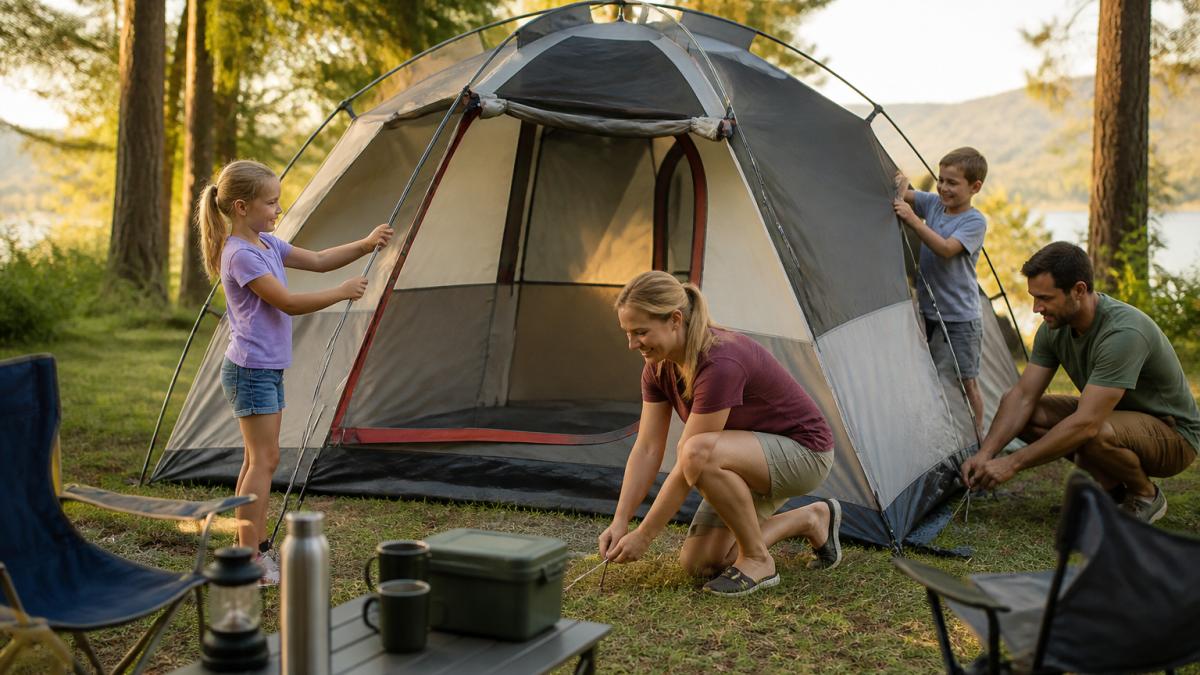
The best family camping tent is a large dome or cabin-style model with a sleeping capacity one higher than your family size, a peak height you can stand up in, and a full-coverage rainfly. Those three features decide whether a tent feels roomy or cramped on night two.
Size, Height and Living Space
Tent capacity ratings assume people sleeping shoulder to shoulder with no gear. A “four-person” tent is comfortable for two adults and two small children, and tight for four adults. Buy one size up.
Peak height is the feature families underestimate. A tent you can stand in changes how a wet morning feels. Look for a model with a vestibule or awning large enough for boots, chairs and a small table.
Weatherproofing That Matters on Family Trips
Ignore hydrostatic head numbers you cannot interpret and focus on construction. A full-coverage rainfly that clips down to the ground, taped seams and a bathtub-style floor keep water out far better than a high rating on a fly that stops halfway.
Check the pole material too. Aluminium poles flex and survive wind; fibreglass poles snap and leave sharp edges. For families camping in exposed sites, aluminium is worth the extra cost.
A tent with a partial rainfly and untaped seams will leak in steady rain, soaking sleeping bags and ending the trip early. Always check that the fly covers the full tent body and that seams are taped, not just stitched.
Camping Sleeping Gear for Families: Warmth, Space and Easy Setup
Camping sleeping gear for families should prioritise warmth retention and setup speed over packed weight. You are not carrying it far, so buy for comfort: wider mats, warmer bags and a setup that takes minutes, not half an hour.
Three purchases do the heavy lifting:
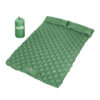
- Sleeping mats: self-inflating or thick foam mats beat thin air mats for warmth and durability. Buy wide, rectangular mats, not tapered ones.
- Sleeping bags: choose a comfort rating a few degrees below the coldest night you expect, and pick rectangular bags for kids who move in their sleep.
- Pillows and liners: a proper camp pillow and a cotton liner make a noticeable difference to how well everyone sleeps.
Air mattresses feel luxurious until they deflate. Foam and self-inflating mats are the safer bet for families, because a slow leak on night two is far less disruptive.
Assign each family member a labelled gear bag for their sleeping kit. Packing and unpacking becomes a two-minute job instead of a tent-wide search, and nothing gets left behind at the site.
Family Camping Kitchen Gear That Saves You Time and Stress
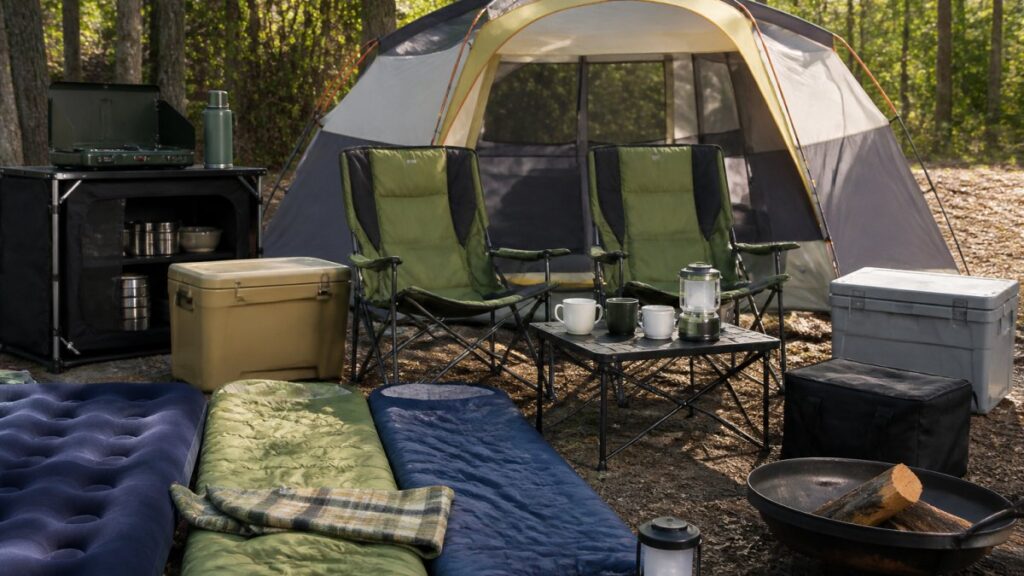
Family camping kitchen gear should cut cooking time and cleanup, not add gadgets. A two-burner stove, a sturdy folding table, a decent cooler and a compact cook set cover almost every family meal.
What actually earns its space:
- Two-burner stove: lets you boil and fry at once, which halves dinner time
- Folding camp table: a stable surface for prep and plates beats balancing on a cooler lid
- Quality cooler or fridge box: keeps food safe across multi-day trips
- Nested cook set and utensils: one compact kit instead of loose items rolling around
- LED lantern and head torches: hands-free light for cooking and late toilet trips
Cleanup is where families lose time. Bring a collapsible wash basin, a small drying rack and a dedicated bin bag system. Fifteen minutes saved each evening adds up across a week.
Food safety matters on multi-day trips. The Food Standards Australia New Zealand guidance on keeping food cold explains safe storage temperatures, and a cooler that holds cold properly is not the place to save money.
Where to Spend More and Where to Save on Family Camping Gear
Spend on shelter, sleep and cooking. Save on lighting, storage and accessories. That split gives you the best camping gear for family comfort without buying premium versions of things that do not affect how a trip feels.
| Category | Spend or Save | Why |
|---|---|---|
| Tent | Spend | Decides weather protection and living space |
| Sleeping mats | Spend | Warmth and durability for every night |
| Stove | Spend | Reliability and cooking speed |
| Cooler | Spend | Food safety across multi-day trips |
| Lighting | Save | Basic LED lanterns work well |
| Storage boxes | Save | Simple tubs do the job |
| Camp furniture | Save | Comfortable basics are enough |
| Decor and extras | Save | Rarely used, rarely missed |
The best family camping tent and the sleeping setup are where budget buys show their limits first. A cheap tent that leaks or a mat that deflates turns a good trip into a long night.
CampNation stocks premium, durable gear selected for reliability in real outdoor conditions, with quick and reliable shipping so your order arrives before your trip. As one customer put it: the products are exactly as described, durable, and easy to use.
Families who camp several times a year and want gear that survives repeated trips without replacing items every season.
Conclusion
The hard part of family camping is not choosing gear, it is resisting the urge to buy everything at once. Focus your budget on the tent, the sleeping setup and the kitchen, and the rest falls into place.
CampNation carries carefully selected, durable equipment built to perform in real conditions, backed by quick and reliable shipping. Browse the range, build your family camping checklist, and get the gear that makes every trip comfortable. Shop now with CampNation and head out prepared.
Frequently Asked Questions
What camping gear does a family actually need for a comfortable trip?
Start with the four items that decide whether a trip feels easy or exhausting: a tent with enough living space, sleeping gear rated for the overnight temperatures you expect, a cooking setup that handles a full family meal, and lighting for the evening. Beyond that, a family camping checklist helps you avoid doubling up on gear and forgetting the small things like pegs, a mallet and spare batteries. Buy the core items well and add extras over time rather than trying to kit out everything at once.
What size tent is best for a family?
A common rule is to buy a tent rated for at least two more people than will sleep in it. A family of four is usually more comfortable in a six-person tent because sleeping mats, bags and bags of clothes take up floor space that the quoted capacity does not account for. Standing height matters too: a tent you can stand up in makes dressing children and changing clothes far easier, especially in wet weather when you are spending more time inside.
What should a family pack for sleeping while camping?
Each person needs an insulated sleeping mat and a sleeping bag suited to the expected overnight low, plus a pillow or something that works as one. Children lose heat faster than adults, so a warmer bag than you would choose for yourself is worth the cost. Pack a spare blanket for cold nights and a breathable layer for warm ones. Inflatable mats that pack down small are easier to transport, while self-inflating mats suit families who want less setup at camp.
How can you keep children comfortable when camping?
Comfort for children usually comes down to warmth, food and familiar routines. Give each child their own sleeping setup so they are not sharing a mat, bring a favourite blanket or pillow from home, and keep meals on a predictable schedule. A dedicated light for the tent makes evenings calmer, and a small stash of easy snacks prevents hunger-driven meltdowns between meals. Shade and a comfortable chair for each person also make long afternoons at camp much easier.