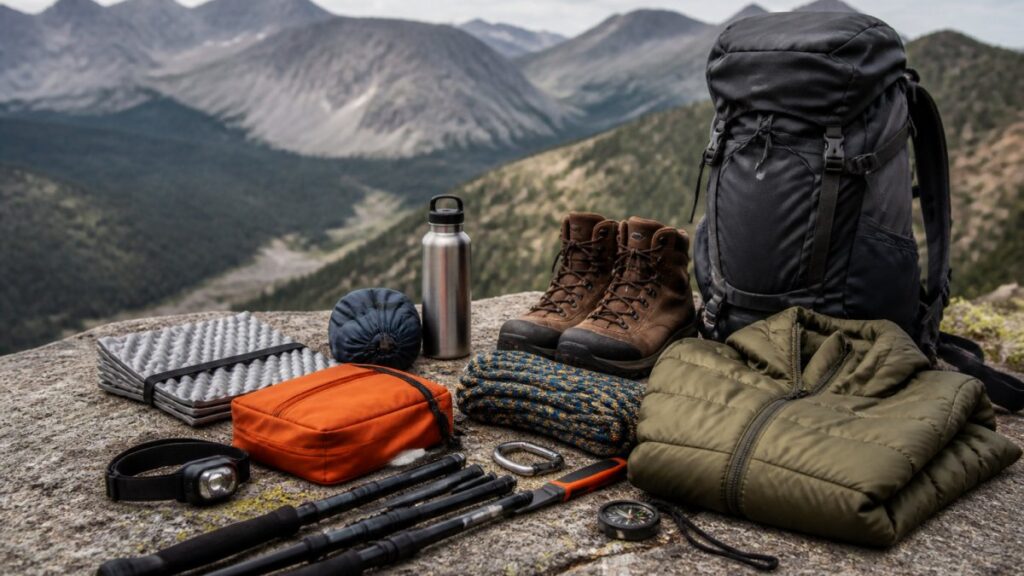
Last Updated: October 26, 2026
Quick Summary
Whether expensive hiking gear is worth it comes down to cost per use: divide the purchase price by the trips you’ll realistically take before replacement. Premium gear often wins this calculation, but only when you honestly estimate how long each item will last and what it costs to keep it going.
- Use the frequency test: under five uses a year, budget is fine; over fifteen, premium earns its keep.
- If gear failure means danger rather than discomfort, spend more on the premium option.
- A $150 shell lasting two seasons costs $75 per year; a $450 shell lasting six seasons costs about $82.
- Beginners should borrow, rent, or buy secondhand before committing to a full premium kit.
- Buy premium on footwear, insulation, rain shells, and anything safety-critical; save on accessories and base layers.
Table of Contents
- Is Expensive Hiking Gear Worth It? The Cost-Per-Use Calculation
- When to Choose Premium Gear Over Budget Gear
- Durability, Lifespan and the Risk of Cheap Gear Failing
- Do Expensive Hiking Poles Make a Difference?
- The Best Hiking Gear for Beginners: Where Budget Makes Sense
- Budget Hiking Gear That Performs: What to Buy Cheap
- Choosing the Best Lightweight Sleeping Bag for Backpacking
- Building Your Gear List at CampNation
- Frequently Asked Questions
Is Expensive Hiking Gear Worth It? The Cost-Per-Use Calculation
Whether expensive hiking gear is worth it comes down to one number: cost per use. Divide the purchase price by the trips you’ll realistically take, and premium gear often wins.
Here’s the uncomfortable truth most buying guides skip.
The formula is simple:
- Cost per use = purchase price ÷ number of trips before replacement
- Total cost of ownership = purchase price + repairs + replacements
- Long-term value = performance and reliability across the gear’s whole lifespan
Run those three numbers before any big purchase. A jacket used twice a year and a sleeping bag used twenty times a year deserve completely different budgets. That’s the calculation that separates a smart buying decision from an expensive mistake.
Australian Competition and Consumer Commission consumer guarantees guide is worth reading before you buy, since consumer guarantees apply to outdoor equipment regardless of price.
When to Choose Premium Gear Over Budget Gear
Choose premium gear when the item sits between you and a bad outcome, or when you’ll use it often enough that durability pays for itself.
The decision framework we recommend to customers:
- Frequency test: Under five uses a year? Budget is fine. Over fifteen? Premium earns its keep.
- Consequence test: If this fails, is the result discomfort or danger? Danger means spend more.
- Weight test: Carrying it for multi-day trips? Every gram matters, and premium materials usually weigh less.
- Fit test: Does it fit your body properly? A cheap item that fits beats an expensive one that doesn’t.
Safety-critical gear belongs in the premium column almost every time.
If you’re leaning toward premium, it helps to browse high quality hiking gear for sale and compare specifications side by side before committing.
The article’s four-part framework for deciding between premium and budget gear comes down to these tests.
| Test | Question to ask | What it points to |
|---|---|---|
| Frequency test | Under five uses a year? | Budget is fine |
| Frequency test | Over fifteen uses a year? | Premium earns its keep |
| Consequence test | If this fails, discomfort or danger? | Danger means spend more |
| Weight test | Carrying it for multi-day trips? | Premium materials usually weigh less |
| Fit test | Does it fit your body properly? | A cheap item that fits beats an expensive one that doesn’t |
Durability, Lifespan and the Risk of Cheap Gear Failing
Durability is where the cost-per-use maths gets decisive, but the useful comparison is not ‘premium versus budget’ in the abstract. It is total cost of ownership: purchase price plus maintenance, repairs, replacements, and the residual value you recover when you sell or pass the item on.
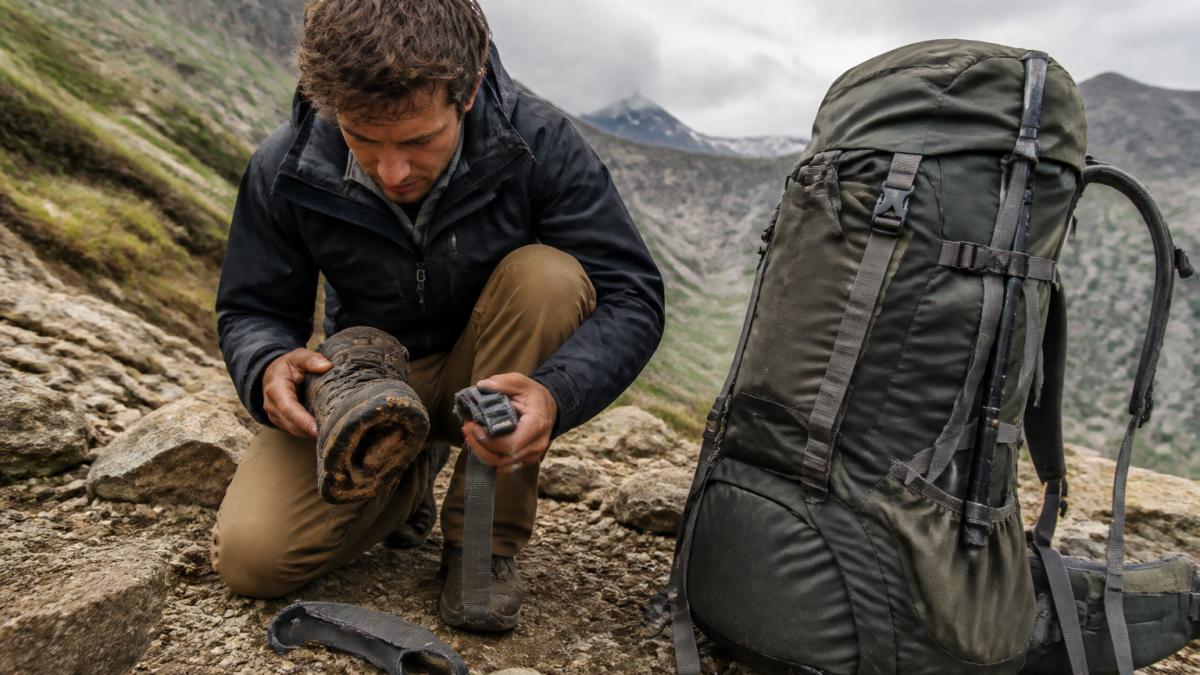
A common pattern among frequent hikers is that a well-made waterproof shell, a quality down sleeping bag, and a sturdy pair of boots each deliver several seasons of regular use before needing major attention. For more on which brands are actually built to last, see Are the Best Camping Gear Brands Actually Built to Last?.
The four costs that decide long-term value
- Purchase price. The sticker you see in the shop.
- Maintenance. Reproofing a shell, washing and storing down correctly, replacing laces and footbeds, cleaning filters. Premium gear usually rewards care with a longer service life, but it also demands it.
- Repair and spares. This is where premium often wins decisively. Boots with resolable construction, packs with replaceable buckles and straps, poles with replaceable tips and segments, and shells with repair patches available all extend life at modest cost. A sealed unit with no spares becomes landfill the moment one component fails.
- Resale or hand-me-down value. Well-known premium brands hold resale value in a way budget gear rarely does, which reduces the effective cost of ownership if you upgrade or change hobbies.
What to inspect before you commit
Judging durability by feel in the shop is unreliable, thick fabric is not automatically tougher. Look instead at stitch density and type, zip hardware (metal versus plastic sliders), seam sealing and taped seams, the quality of buckles and cord locks, and whether the brand publishes a repair policy or sells spare parts. A warranty that covers manufacturing defects is useful; a repair service that keeps the item in use for years is more valuable still.
Cheap gear rarely fails at a convenient moment. It tends to fail mid-trip, in demanding conditions, when you are furthest from a replacement. That hidden cost, a ruined trip, a forced early exit, an emergency purchase at trailhead prices, is the one most buyers never factor into the cost-per-use calculation.
A worked comparison
Take two rain shells used on twenty walking days a year. A budget shell at $150 that lasts two seasons costs $75 per year of service. A premium shell at $450 that lasts six seasons, with one $40 reproof in year three, costs roughly $82 per year, close enough that the premium shell’s better breathability, fit, and storm protection tip the decision.
Australian Competition and Consumer Commission consumer guarantees guide is worth reading before you buy, since consumer guarantees apply to outdoor equipment regardless of price and can affect your remedy if an item fails prematurely.
Do Expensive Hiking Poles Make a Difference?
Yes, expensive hiking poles make a real difference, mainly in weight, locking mechanisms, and how they handle load on descents. The gains are modest for casual day hikes and substantial for long-distance trekkers carrying pack weight over rough ground.
Where premium poles earn their price:
- Lock reliability: Cheap flick locks slip under load. Quality locks hold.
- Weight: Carbon and better alloys cut fatigue over multi-day trips.
- Shock absorption and grip: Better grips and tips reduce hand and wrist strain.
For occasional use, a solid budget pair is perfectly adequate. For regular use on steep terrain, the upgrade is money well spent.
The Best Hiking Gear for Beginners: Where Budget Makes Sense
Beginners should buy budget on almost everything except footwear and insulation, but the smarter strategy is to delay buying altogether until you know what you actually need. You do not yet know your preferences, your frequency, or your terrain, so spending heavily upfront is a guess dressed up as an investment.
The try-before-you-buy ladder
A practical sequence for new hikers, from lowest commitment to highest:
- Borrow first. Most clubs, friends, and family have a spare pack, tent, or stove. Borrowing for your first two or three trips costs nothing and teaches you what you actually value.
- Rent for the specific trip. Many outdoor retailers and hire outfits rent tents, packs, and sleeping bags for a weekend or a week. Renting lets you test a category, say, a three-season tent, before committing. The rental fee is not wasted; it is research.
- Buy secondhand for non-critical items. Packs, cookware, and shelters are commonly available secondhand in good condition. Inspect seams, zips, and buckles, and check that the item has not been stored damp. Avoid secondhand safety-critical items such as helmets or climbing hardware unless you know their history.
- Buy budget new for the rest. A well-fitted budget pack beats an ill-fitting premium one. Basic synthetic layers work fine while you learn what you need. Simple cookware and accessories are cheap and reliable.
- Upgrade only what you use hard. After a season, you will know which items you reach for every trip and which sit in the cupboard. Put your money there.
Where budget makes sense, and where it does not
Start with these budget-friendly priorities:
- Backpack: Fit matters more than price. Get measured and try loaded packs before buying.
- Clothing layers: Basic synthetic base and mid layers perform well; upgrade the shell first when you start hitting real weather.
- Cookware and accessories: Simple, functional options are cheap and reliable.
Spend more early on footwear and insulation. Boots that fit properly and a sleeping bag rated for the conditions you actually camp in are the two places where a cheap choice most often ends a trip early.
A common mistake is buying a full premium kit before the first trip. Most beginners discover their real gear priorities only after a few outings, often that the pack they bought is too heavy, or the tent is too small. Buy cheap where it is safe to, then upgrade the items you actually use hard.
For a deeper starting point, our guide to lightweight camping gear walks through the essentials without overspending.
Budget Hiking Gear That Performs: What to Buy Cheap
Some budget hiking gear performs nearly as well as premium, and it’s worth knowing which categories to save on. Accessories, stuff sacks, utensils, and basic base layers are usually fine at the cheaper end.
Buy cheap on:
- Stuff sacks and organisers
- Utensils and small cookware
- Base layers and casual clothing
Buy premium on:
- Footwear and boots
- Sleeping bags and insulation
- Rain shells
Military surplus deserves a mention. Well-made surplus gear can deliver quality gear at budget prices, though weight and fit are often compromised. It’s a smart option for car campers, less so for weight-conscious backpackers.
Choosing the Best Lightweight Sleeping Bag for Backpacking
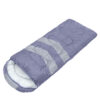
The best lightweight sleeping bag for backpacking balances warmth, packed weight, and pack space against your budget and expected conditions. Down insulation offers the best warmth-to-weight ratio, which is why it dominates the premium end of the market.
When comparing sleeping bags, check four things:
- Temperature rating: Match the rating to the coldest conditions you’ll actually camp in, not the average.
- Fill power and fill weight: Higher fill power means more warmth for less weight.
- Packed size: Pack space is precious on multi-day trips.
- Shell and construction: Look at baffles, zip quality, and whether the shell handles damp conditions.
Down bags need more care than synthetic, but they last for years with proper storage and cleaning. That lifespan is exactly what makes the cost-per-use maths work in their favour.
Building Your Gear List at CampNation
The smartest approach is to spend more where failure hurts and save where it doesn’t. That single principle resolves most gear buying decisions faster than any review.
At CampNation, we stock premium quality gear built to last outdoors, carefully selected for reliability and performance in real conditions.
A customer told us recently: “The products are exactly as described, durable, and easy to use.
Frequently Asked Questions
What is the 20% rule for backpacking?
The 20% rule is a rough guideline that your loaded pack should weigh no more than about 20% of your body weight. A 70 kg hiker would aim for a pack under 14 kg. It is a starting point, not a hard limit, because fitness, terrain and trip length all change what feels manageable. The rule matters when you buy expensive hiking gear: a lighter sleeping bag or shelter can cut a kilogram or more, which is often the real reason people pay more.
Which hiking gear is worth spending more on?
Spend more on the items that sit between you and the weather or the ground: your shelter, sleeping system, footwear and rain jacket. These are the pieces where failure has real consequences and where cheap materials wear out fastest. Budget hiking gear is fine for items that do not carry safety weight, such as stuff sacks, camp cutlery, basic headlamps and trekking accessories. Match the spend to how often you go and how remote the trip is.
Does lightweight hiking gear justify the higher price?
It can, if you hike often or cover long distances. Lighter gear usually costs more because it uses stronger fabrics and more precise construction, so the weight saving comes with durability rather than instead of it. For a weekend camper doing short day hikes, the difference is rarely worth the extra outlay. For multi-day treks and long-distance walking, cutting pack weight reduces fatigue and injury risk, which is where the best lightweight sleeping bag for backpacking and similar upgrades earn their cost.
Is expensive hiking gear overkill for a casual weekend camper?
Sometimes, yes. If you camp a few times a year on established tracks, mid-range gear covers you well and premium kit adds cost without much practical gain. The exception is anything safety-critical: a shelter that leaks or a sleeping bag rated too warm for the conditions will ruin a trip regardless of how often you go. Buy reliable basics first, then upgrade the pieces you use most as your trips get longer or more remote.
Your next trip is the real test of every buying decision you make. Build a gear list that matches how you actually hike, not how you imagine you might. Get started with CampNation and equip yourself with gear that performs when it counts.