Last Updated: October 25, 2026
Quick Summary
The most reliable camping gear brands are category specialists backed by published specifications and repair support, such as Terra Nova and MSR for tents, Therm-a-Rest for sleeping pads, Osprey for backpacks, Snow Peak for cookware and Sea to Summit for dry storage. Judge camping gear brands by their warranty exclusions and spare-part availability, not by marketing claims.
- Zips, pole joints, seam tape, valve seals and buckle hardware fail first, so inspect these before buying.
- Read the comparison table by category, not by brand, because reliability is category-specific.
- The exclusion clause matters more than warranty length, since normal wear and tear voids most year-three claims.
- A generous warranty with no spare parts is less useful than a modest warranty with a stocked repair catalogue.
- Beginners need a three-season tent with a full-coverage fly, an insulated pad, a stove, a dry bag, a head torch and a repair kit.
Table of Contents
- How We Judge Camping Gear Brands for Reliability
- Quick Comparison: Camping Gear Brands at a Glance
- The Most Reliable Tent Brands for Weather and Wear
- Sleep Systems and Durable Camping Gear by Category
- Camping Gear Warranty and Repair Support Compared
- Best Camping Gear for Beginners Without Overkill
- Matching Gear to Your Camping Style and Conditions
- Choosing Reliable Camping Gear at CampNation
- Frequently Asked Questions
How We Judge Camping Gear Brands for Reliability
Reliability in camping gear is the likelihood a product survives repeated real-world use without failing at a critical moment. We judge camping gear brands on evidence of durability, repairability and long-term support, not marketing claims.
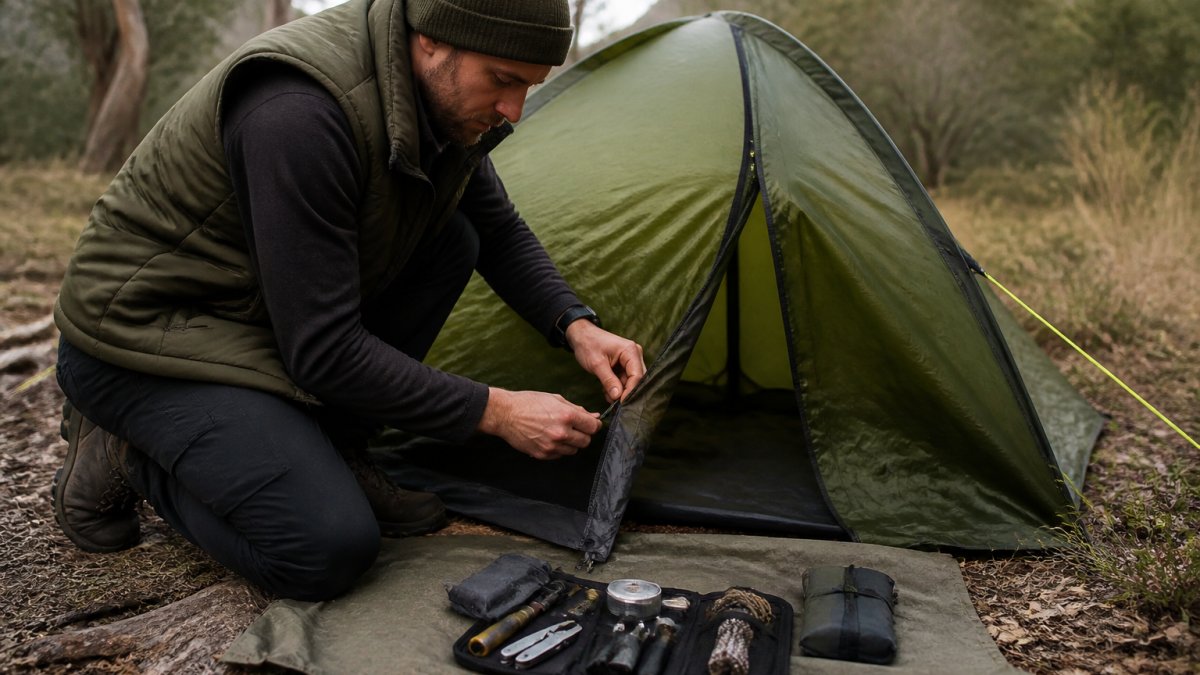
Most gear roundups rank products on features and price. We rank them on what happens in year three, when the zip has been yanked a thousand times and the seam tape has seen a full season of sun.
What Counts as Evidence of Durability
Strong evidence looks like this:
- Materials named specifically: ripstop nylon with a stated denier, aluminium alloy poles rather than generic “lightweight metal”.
- Published repair programmes: spare poles, zip sliders and patch kits sold as standard.
- Warranty terms written in plain language, with the exclusions stated up front.
The Failure Points That Matter Most
Zips, pole joints, seam tape, valve seals and buckle hardware fail first. These are the components worth inspecting before you buy, and the ones a reliable brand designs around.
Pegging out is another quiet killer. If you camp on hard or rocky ground, read our guide to durable tent pegs for rocky ground before your next trip.
Quick Comparison: Camping Gear Brands at a Glance
The table below summarises how various brands stack up by category, including each brand’s reliability mechanism, its strongest category and where it is a weaker bet.
| Brand | Strongest Category | Reliability Mechanism to Look For | Weaker Category to Avoid | Best For |
|---|---|---|---|---|
| Terra Nova | Tents | Expedition-grade construction and published specifications | Budget casual camping | Harsh conditions |
| MSR | Tents and stoves | Long track record across two failure-prone categories | Ultra-budget cookware | Backpackers |
| Therm-a-Rest | Sleeping pads | Category specialist with iteration on valve seals and baffles | Tents and shelters | Side sleepers |
| Osprey | Backpacks | Reputation built on pack durability and harness construction | Cookware and stoves | Long-distance trekkers |
| Snow Peak | Cookware | Precision build in pots and cups | Tents and shelters | Camp cooks |
| Sea to Summit | Dry storage | Dry bags and accessories with sealed construction | Sleeping pads | Wet-weather camping |
| The North Face | Tents | Broad range, widely available, easy to replace | Specialist expedition shelter | Everyday campers |
| Big Agnes | Tents | Lightweight shelter design | Abrasive-ground camping without a footprint | Weight-conscious hikers |
| Coleman | Budget camping | Lower-cost entry point with wide parts availability | Harsh-weather and remote use | Casual weekend use |
Read the table by category, not by brand. The most common buying mistake is assuming a brand’s tent reputation carries over to its stove, its pad or its dry bags. Reliability is category-specific.
How to Read the Table
Three columns do the work. The reliability mechanism column tells you what the brand actually does differently, a construction method, specification standard or support model. The weaker category column is the one most roundups leave out, and it prevents expensive mistakes. The best for column maps the brand to a camping style.
If a brand does not appear in the table, that is not a judgement on its quality, it means we have not seen enough consistent field evidence, published specifications or repair support to place it confidently.
What the Table Does Not Tell You
A comparison table cannot capture warranty responsiveness, spare-part lead times or how a brand handles a claim in year three. Use the table to shortlist by category, then the warranty comparison below to decide between shortlisted brands.
The Most Reliable Tent Brands for Weather and Wear
The most reliable tent brands are the ones that publish clear specifications and back them with repair support. Terra Nova and MSR sit at the expedition end; The North Face and Big Agnes cover everyday camping well.
Expedition-Grade Shelter: Terra Nova and MSR
Terra Nova builds expedition-grade shelters for demanding conditions. MSR is associated with both tents and stoves, which says something about how the brand is regarded across categories. Neither is the cheapest route into camping.
Best for: remote trips and harsh weather.
Skip if: you camp twice a year in mild conditions.
Everyday Tent Brands: The North Face and Big Agnes
Big Agnes leans toward lighter shelter design, suiting hikers counting grams; The North Face trades some weight saving for availability and range.
Watch out: lightweight fabrics trade durability for packability. If you camp on abrasive ground, use a footprint.
Sleep Systems and Durable Camping Gear by Category
Durable camping gear varies by category, because a pad, a pack and a dry bag fail in completely different ways. Judge each brand on the category it actually specialises in.
Sleeping Pads and Mattresses
Therm-a-Rest is the name most associated with sleeping pads, and category specialists usually earn that reputation through iteration. Valve seals and baffle construction are the parts to check. Our self-inflating mat vs air mattress comparison covers the durability trade-offs.
Packs, Cookware and Dry Storage
Osprey is associated with backpacks, Snow Peak with pots and cups, and Sea to Summit with dry bags. Each is a specialist in its lane rather than a generalist, and a brand that makes one thing well usually makes it better than a brand that makes twenty.
Camping Gear Warranty and Repair Support Compared
Camping gear warranty terms vary widely between brands. A generous warranty with no spare parts is less useful than a modest warranty with a stocked repair catalogue. The practical test is whether the brand can get you a replacement pole, zip slider or patch before your next trip.
The Four Questions That Separate Brands
Four factors determine whether warranty and repair support is genuinely useful:
- Coverage scope: does the warranty cover zips, poles and seams, or only manufacturing defects? A warranty that excludes the components that fail first covers the least likely failure.
- Spare-part availability: are replacement poles, sliders, buckles and patches sold separately and listed publicly? A brand that stocks parts expects its gear to be repaired, not replaced.
- Repair service: is there a published repair service, where is it based, and what is the stated turnaround time? A repair centre on the other side of the country adds weeks to a claim.
The exclusion clause matters more than the warranty length. A ten-year warranty that excludes normal wear and tear will not cover the zip that failed after a thousand pulls. Read the exclusions before you buy, not after something breaks.
Brand-by-Brand Warranty and Repair Patterns
The table below compares the brands in this article on the factors above. Where a brand’s terms are not published in plain language, that is recorded as a gap rather than assumed to be generous.
| Brand | Warranty Scope (as published) | Spare Parts Sold Separately | Repair Service | Watch For |
|---|---|---|---|---|
| CampNation | Item-specific; check each product page | Selected add-ons and repair items | Support via store | Confirm coverage before ordering |
| Terra Nova | Plain-language terms with exclusions stated | Poles and repair kits available | Published repair route | Expedition gear is expensive to replace, so repair matters |
| MSR | Covers manufacturing defects; wear excluded | Stove and tent parts widely stocked | Authorised service | Stove parts availability varies by model |
| Therm-a-Rest | Defects covered; valve and seam issues assessed case by case | Valve and patch kits available | Repair assessment service | Valve seals are the common failure point |
| Osprey | Strong reputation for pack warranty support | Buckles, straps and harness parts available | Repair service | Fabric abrasion is usually classed as wear |
| Snow Peak | Defects covered; precision build reduces failure rate | Limited parts catalogue | Service via retailer | Fewer user-serviceable parts |
| Sea to Summit | Defects covered; field repair kits sold | Patch kits and buckles available | Limited repair service | Sealed seams are hard to repair at home |
| The North Face | Standard defects warranty | Limited tent-specific parts | Retailer-led claims | Availability makes replacement easier than repair |
| Big Agnes | Defects covered; pole and fly issues assessed | Pole sections and repair kits available | Repair service | Lightweight fabrics wear faster on abrasive ground |
| Coleman | Basic defects warranty | Wide parts availability | Limited formal service | Budget pricing means replacement often beats repair |
What This Means in Practice
Two patterns stand out. The brands with the strongest repair ecosystems, published parts catalogues and a stated repair route, are also the brands whose gear is worth repairing. Budget brands often win on parts availability simply because their products are common.
Long-term campers often buy the repairable option even when it costs more up front, because total cost over the product’s lifespan is lower.
A Pre-Purchase Checklist
- Does the warranty cover zips, poles and seams, or only manufacturing defects?
- Are replacement poles, sliders and patches sold separately and listed publicly?
- Is there a published repair service, and where is it based?
Once your gear is home, maintenance is what actually extends its life. Our guide to making camping gear last walks through the steps that keep zips, seams and coatings working season after season.
Best Camping Gear for Beginners Without Overkill
The best camping gear for beginners is a small set of dependable items covering shelter, sleep, cooking and light, without paying for expedition features you will never use.
Our shortlist for a first setup:
- A three-season tent with a full-coverage fly
- A sleeping pad with a stated insulation rating
- A simple two-burner stove or a reliable single-burner
If you want a fuller starting point, our beginner camping gear list sets out the essentials in order of priority.
Matching Gear to Your Camping Style and Conditions
Gear reliability is relative to conditions. A tent that performs beautifully on a maintained campsite can fail on an exposed ridge.
Match your kit to how you actually camp:
- Car camping and family trips: prioritise comfort and pack size over weight.
- Backpacking: weight and packability drive every decision.
- Off-road and remote trips: prioritise repairability and spare parts.
If your trips lean remote, our guide to durable outdoor gear for remote exploration goes deeper into what holds up when there is no backup plan.
Choosing Reliable Camping Gear at CampNation
CampNation stocks camping gear selected for reliability and performance, judged the way this article describes: materials, repair support and long-term durability rather than feature lists.
Customers tell us the difference shows in use. As one put it: “The products are exactly as described, durable, and easy to use.”
Pricing depends on the item and season, so check the current price on each product page.
Frequently Asked Questions
What company makes the best camping gear?
There is no single best company across every category. Tent specialists such as Terra Nova, MSR, The North Face and Big Agnes lead on shelter, Therm-a-Rest is known for sleeping pads, Osprey for backpacks, and Snow Peak for cookware. The most reliable choice depends on the category you are buying and how hard you use it. Check the brand’s track record in that specific product type, its warranty terms and whether replacement parts are available before committing.
What is the most reliable tent brand?
For demanding conditions, Terra Nova and MSR are the names most often associated with expedition-grade shelter and tested performance. The North Face and Big Agnes appear in top-rated camping and hiking listings and are widely used for general camping. Reliability comes down to pole quality, seam sealing, waterproof ratings and fly coverage. Ask how the tent handles wind and sustained rain, and whether the brand stocks replacement poles and pegs.
How can you tell whether camping gear is reliable?
Look for independent long-term testing, a clear warranty period, and evidence that replacement parts exist. Read reviews that mention wear after a full season rather than first impressions. Check the specifics: denier ratings on fabrics, waterproof hydrostatic head figures, pole materials and zipper brands. A brand that publishes repair guidance and sells spare parts is usually signalling that the gear is built to be maintained, not thrown away.
Is expensive camping gear always more reliable?
No. Price often reflects materials and construction, but it does not guarantee longevity. Some lower-cost brands such as Coleman are recommended as budget options and suit occasional weekend use well. The better question is value over the product lifespan: a mid-priced item with a strong warranty and available spare parts can outlast a premium item with no support. Match the gear to how often and how hard you camp.
What is the best camping gear for beginners?
Start with the essentials: a tent suited to your local weather, a sleeping bag rated for the coldest night you expect, a sleeping pad for insulation and comfort, and a simple stove. Choose brands with clear warranty terms rather than the cheapest option. Buy for the trips you actually take, then upgrade as your plans grow. CampNation stocks gear selected for durability, so beginners are not replacing equipment after a couple of trips.
Reliable gear is not about spending the most. It is about knowing which components fail, which brands publish their warranty terms, and which categories deserve your budget. That is the standard we hold our range to. Browse the CampNation range to compare durable tents, sleep systems and camp cookware, and get gear that is ready for the trip you are actually planning.