Table of Contents
- Why Standard Tent Pegs Fail on Rocky Ground
- Tent Pegs for Hard Ground: What Actually Holds
- How to Get Tent Pegs into Hard Ground
- Screw-In Tent Pegs for Camping: Where They Work and Where They Don’t
- Tent Peg Alternatives for Rocky Ground
- Top Durable Tent Pegs for Rocky Ground: Comparison and Verdict
- Conclusion
- Frequently Asked Questions
Last Updated: October 21, 2026
Why Standard Tent Pegs Fail on Rocky Ground
Most tent peg failures on rocky ground happen because the peg was designed for soil, not stone.
Customer feedback shows the same pattern: people buy a cheap set of pegs, lose two or three to bending on the first trip, then look for something tougher.
The failure modes are predictable:
- Shaft bending at the point where the peg meets resistance
- Tip blunting after repeated contact with stone
- Shallow penetration because the peg cannot push past gravel
Pick a peg that resists bending, reaches past the loose top layer, and holds under tension, and rocky ground stops being a problem.
Tent Pegs for Hard Ground: What Actually Holds
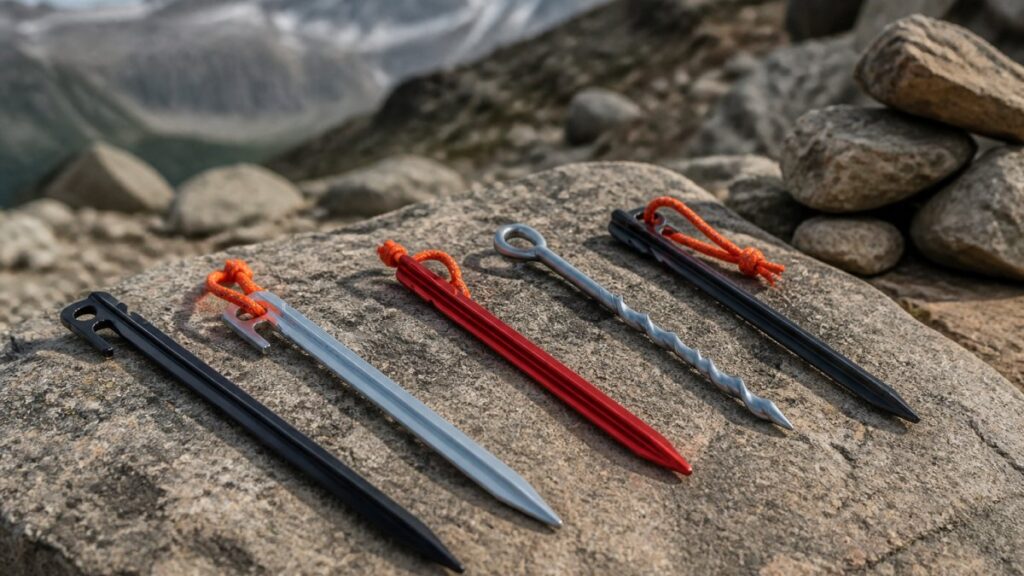
Tent pegs for hard ground need three qualities: a profile that resists bending, a material strong enough for the load, and enough length to reach firm material below the surface. Miss any one and the peg will bend, slip, or refuse to seat. But “hard ground” is not one condition; compacted soil, gravel, shallow rocky soil, and solid rock each demand a different peg.
Match the Peg to the Ground You Are Actually On
Use this decision guide before you pack.
| Ground condition | What it feels like | Peg that works | Peg that fails | Why |
|---|---|---|---|---|
| Compacted soil | Firm underfoot, no loose stones, resists a thumb push | Three-sided steel peg with chisel tip, 20-25 cm | Thin wire or short aluminium stake | Needs a stiff shaft to penetrate without buckling |
| Gravel and road base | Loose stones that shift and rattle | Long steel peg (25 cm+) driven at 60 degrees, or a deadman anchor | Screw-in peg, short round stake | Loose material offers little grip; length reaches firmer layer below |
| Shallow rocky soil | Thin soil over bedrock, peg stops hard after a few centimetres | Three-sided steel peg with chisel tip, or rock anchor | Any peg driven with force | Forcing a peg into shallow soil blunts the tip and bends the shaft |
| Solid rock | No penetration at all | Rock anchor, deadman anchor, or relocate the pitch | Every peg type | No peg can hold in solid rock; stop trying |
Campers often buy one peg type for a whole trip, then discover half their pitches are on a different ground condition. Packing two types, a heavy-duty straight peg and a lightweight backup, covers most multi-day trips.
Stake Profile and Bending Resistance
Profile matters more than most campers realise. A three-sided design, often called a Y-beam or V-profile, puts a folded edge along the length of the stake that acts like a spine, resisting bending far better than a flat or round shaft of the same weight.
Round stakes drive cleanly into soft ground, but on stony ground a round shaft glances off rocks rather than biting between them. A three-sided stake with a chisel tip finds the gaps.
Look at the tip before anything else. A tapered, chisel-style point splits small stones and works into cracks. A blunt or rounded tip just skids across rock and blunts quickly.
Material Choice: Steel vs Aluminium vs Titanium
Material decides how a peg behaves under a hammer. Steel is heaviest and most forgiving: it absorbs impact and bends before it snaps, and galvanised steel adds rust resistance for wet coastal conditions. Aluminium is lighter and cheaper, but a thin aluminium peg dents and bends at the first serious obstruction.
| Material | Strength | Weight | Best For | Trade-off |
|---|---|---|---|---|
| Galvanised steel | High | Heaviest | Hard and stony ground, car camping | Bulk and pack weight |
| Aluminium alloy | Moderate | Light | Soft ground, fair-weather trips | Bends on rock |
| Titanium | High for its weight | Lightest | Backpacking on mixed terrain | Higher cost per peg |
For rocky terrain, steel earns its weight. Backpackers counting grams can accept titanium, but should expect to pay more and treat the pegs carefully.
How to Judge Durability Before and After You Buy
“Heavy-duty” and “durable” are marketing words until you know what failure looks like. Assess a peg on four points:
- Shaft bending. A peg that bends permanently after one or two strikes has failed. A slight flex that springs back is acceptable; a kink is not.
- Tip damage. Inspect the point after each trip. A blunted or mushroomed tip means the peg is striking stone rather than finding gaps; change your placement or your peg.
- Corrosion. Galvanised coatings wear at the tip and where the hammer strikes. Rust at those points shortens the peg’s life, especially in coastal or wet conditions.
A simple field test: after a trip, roll each peg on a flat surface. A peg that wobbles is bent and should be retired from rocky-ground duty. Keep a small file or rough stone to dress a blunted tip between trips.
Durability is not a label; it is a pattern of behaviour under repeated impact. Buy a peg whose profile and material suit the ground you will actually pitch on, then inspect it after every trip for bending, tip wear and corrosion.
How to Get Tent Pegs into Hard Ground
Getting tent pegs into hard ground is a technique problem as much as a gear problem. The right peg helps, but the wrong method will still bend it.
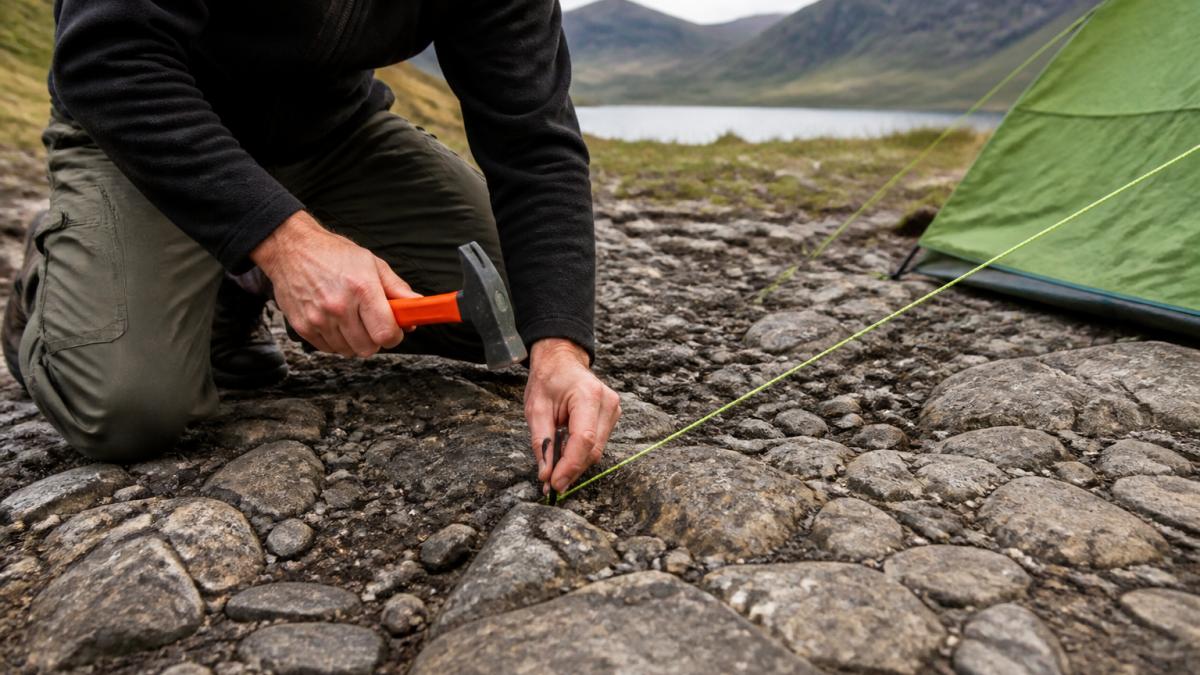
Work through it in this order:
- Clear the surface. Scrape away loose gravel and leaf litter so you can see the ground you are driving into.
- Probe first. Push the peg tip into the ground by hand before you swing anything. If it stops almost immediately, move 10 centimetres and try again.
- Angle away from the tent. Drive the peg at roughly 60 degrees with the top leaning away from your guy line. This increases holding power under tension.
- Tap, do not pound. Short, controlled strikes with a mallet or a flat rock move the peg steadily. Big swings bend shafts.
- Stop at resistance you cannot beat. If the peg will not advance after firm taps, pull it and find another anchor point. Forcing it is how pegs die.
Never hammer a peg all the way to the head on rocky ground. Leave a few centimetres exposed so you can pull it out later. A peg driven flush into stony ground is genuinely difficult to remove without damaging the guy line or the peg.
Screw-In Tent Pegs for Camping: Where They Work and Where They Don’t
Screw-in tent pegs for camping are excellent in soft ground and close to useless on rock. The auger-style shaft needs material it can bite into: grass, dirt, sand, soft soil.
Where screw-in pegs shine:
- Grass pitches at established campsites
- Sandy ground where a straight peg pulls out
- Loose dirt that offers no resistance to a smooth shaft
Where they fail:
- Rocky or stony ground with buried stone
- Hard-packed ground that has dried solid
- Gravel and road base
If your trip mixes terrain, pack screw-ins for the grassy nights and heavy-duty straight pegs for everything else. One peg type will not cover a multi-day trip across changing ground.
Tent Peg Alternatives for Rocky Ground
When the ground refuses to take a peg at all, tent peg alternatives for rocky ground keep your shelter standing. Stop fighting the rock and use what the site gives you.
- Rocks as anchors. Loop the guy line around a large stone, then stack smaller rocks on top to lock it. This is the oldest trick in the book and still the most reliable on solid rock.
- Deadman anchor. Bury a peg or a stuff sack horizontally in a shallow trench, backfill it, and tension the line. This works in loose gravel where a vertical peg cannot hold.
- Trees and roots. Tie off to a solid trunk or exposed root where regulations allow. Use a tree-friendly strap rather than rope directly on bark.
On solid rock, no peg will hold. Accept it early, use rock anchors or a deadman setup, and save your pegs for the sections of ground that can actually take them.
Top Durable Tent Pegs for Rocky Ground: Comparison and Verdict
Most roundups quote manufacturer claims and call it a test.

Vargo Titanium Stake. CleverHiker lists this titanium stake at 0.28 oz per stake with a 4.2/5.0 rating and highlights it for rocky ground.
MSR Groundhog. 99Boulders describes the Groundhog as strong, durable and lightweight, and names it the top pick for a versatile single stake; one peg that handles most conditions.
Eurmax Galvanized 10-inch Round Stakes. OutdoorGearLab recommends these galvanised round stakes for camping and describes them as durable and reliable in both soft and hard ground.
| Peg | Material | Reported Strength | Best For | Key Limitation |
|---|---|---|---|---|
| Vargo Titanium Stake | Titanium | 4.2/5.0 (CleverHiker) | Ultralight backpacking | Durability under impact unconfirmed |
| MSR Groundhog | Not stated | Strong and durable (99Boulders) | Versatile all-round use | No rock-specific data |
| Eurmax Galvanized 10-inch | Galvanised steel | Durable and reliable (OutdoorGearLab) | Mixed soft and hard ground | Round profile bends more easily |
| Tentsile Giant Pegs | Not stated | Extremely strong (Trailspace) | Hard soil, no hammer needed | Weight and material unconfirmed |
How These Pegs Are Likely to Fail on Rock
Published reviews rarely describe failure modes, so here is what to watch for based on each peg’s design:
- Vargo Titanium Stake. Titanium is strong for its weight but thin sections can deform under repeated hammering. Expect tip wear rather than shaft bending; a lightweight mallet or a flat rock used gently is safer than a heavy hammer.
- MSR Groundhog. A three-sided profile resists bending well, but without published rock-specific data, treat it as a strong all-rounder rather than a dedicated rock peg. Watch the tip for blunting on gravel.
- Eurmax Galvanized 10-inch. The round shaft is the weak point on stony ground: it glances off stones and bends where it meets resistance. The galvanised coating will wear at the tip and head with repeated use.
Weight, Packability and Value Trade-offs
A durable peg is only good value if you will carry it. The trade-off:
- Car camping. Weight and pack size matter less, so galvanised steel pegs give the best durability per dollar. Buy a set of 10-12 and accept the bulk.
- Backpacking. Every gram counts. Titanium or a lightweight three-sided alloy peg is the right call, but budget for replacing a bent peg occasionally and carry a spare or two.
- Mixed trips. Pack four heavy-duty steel pegs for the corners and guy lines that take the most load, plus lightweight pegs for the rest. This hybrid kit covers rocky and soft ground without carrying a full steel set.
Prices vary by retailer and season, and the sources above do not quote Australian pricing, so compare locally before buying. A peg that costs more but survives repeated rocky-ground trips is usually cheaper than replacing a budget set every season.
Our verdict: for rocky ground, favour a three-sided steel peg with a chisel tip and enough length to reach past the loose layer. Titanium is the right call if pack weight is your priority.
Conclusion
Rocky ground exposes weak gear faster than any other terrain, and a bent peg at dusk is a miserable way to learn that lesson. Match the peg to the ground, drive it with control, and keep a rock-anchor trick in reserve for the sections that refuse to cooperate.
If you want gear you can trust on stony, hard-packed and mixed terrain, CampNation stocks durable camping equipment chosen for exactly these conditions, with quick and reliable shipping. Shop now and pitch with confidence.
Frequently Asked Questions
What type of tent pegs are best for rocky soil?
For rocky soil, look for a narrow, three-sided stake made from titanium or hardened steel. The pointed profile lets the peg find gaps between stones, while the material resists bending when it glances off rock. Avoid wide, flat pegs and thin wire hooks, which bend or snap on contact. A length of around 15-20 cm gives enough penetration depth without demanding a deep, clear hole. If the ground is too stony for any peg, switch to rock anchors or tie off to a boulder instead.
Are screw-in tent pegs suitable for rocky ground?
Screw-in tent pegs for camping work well in soft grass, sand and loose dirt, but they are a poor match for rocky ground. The thread needs soil to bite into, and stones stop the screw from turning or strip the hole. Use them on established campsites with soft ground, and keep a set of narrow titanium or steel pegs for stony terrain. Carrying both types covers the range of ground you will meet on a multi-day trip.
How do you get tent pegs into hard ground?
Start by clearing loose stones and finding a natural crack or softer patch. Hold the peg at a slight angle away from the tent and tap it gently with a mallet or a smooth rock, letting the point find its way rather than forcing it. Once it bites, increase the force. If the ground is hard-packed, pour a small amount of water on the spot and wait a minute to soften it. Never hammer a peg flush with the ground; leave a few centimetres exposed so you can pull it out.
How can you secure a tent when you cannot drive a peg into the ground?
When the ground refuses a peg, use tent peg alternatives for rocky ground. Loop your guy line around a large boulder, a tree root or a sturdy shrub, then pad the contact point to protect the line. You can also fill a stuff sack with stones and bury it in a shallow depression, tying the line to the sack. Rock anchors, which wedge into cracks, work well on exposed rock slabs. Plan your pitch around natural anchors before you start hammering.