Table of Contents
- What Makes Durable Camping Sleeping Bags Worth the Investment
- Choosing the Right Sleeping Bag Temperature Rating for Your Trips
- Down vs Synthetic Sleeping Bag: Which Insulation Lasts Longer?
- Shape, Fit, and Features That Affect Durability
- Sleeping Bag Lifespan: How Long Should Yours Last?
- Sleeping Bag Care and Storage to Maximise Longevity
- Repair, Warranty, and Long-Term Ownership Costs
- Conclusion: Your Durability Checklist
- Frequently Asked Questions
Last Updated: October 14, 2026
What Makes Durable Camping Sleeping Bags Worth the Investment
Choosing durable camping sleeping bags is less about price and more about how many seasons the bag survives before the insulation collapses, the zipper jams, or the shell abrades. At CampNation, we see the same pattern: a cheap bag often needs replacing after two or three trips, while a well-built bag can run a decade or more with basic care.
The Real Cost of Replacing Cheap Bags Every Season
A budget bag that fails after a single season isn’t cheap, it’s a recurring cost. Durable construction costs more upfront but spreads that cost across many more nights.
How to Spot Quality Construction Before You Buy
Check the stitching first: dense, even seams and reinforced stress points around the hood and zipper. The shell should feel substantial, not papery, and the baffles should hold evenly distributed insulation with no cold spots.
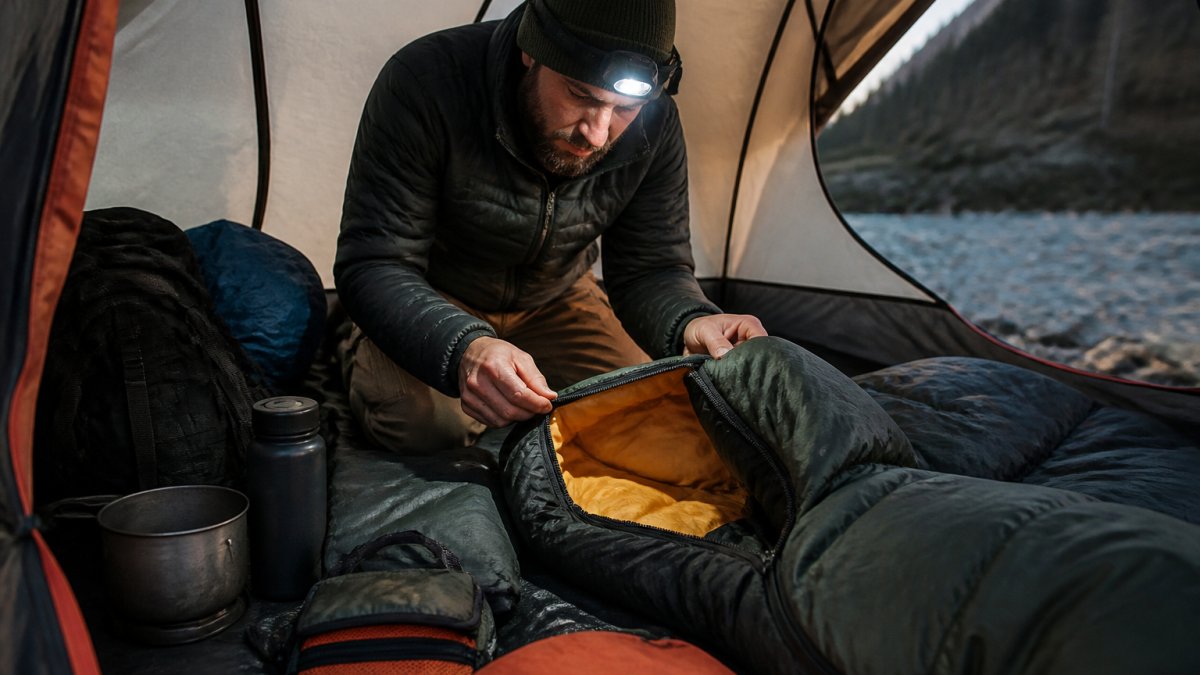
Most buyers inspect the outside of a bag and never check the inside lining. Flip it inside out. If the lining feels thin or the seams look rushed, the bag will wear out faster than the shell suggests.
Choosing the Right Sleeping Bag Temperature Rating for Your Trips
The temperature rating on a bag is a range, not a single number. Modern bags list a comfort rating, a lower limit, and an extreme limit under the ISO standard.
For three-season use in most Australian conditions, a comfort rating around 0°C to 5°C covers the bulk of trips; for cold weather or alpine camping, look for a bag rated well below freezing.
| Rating Type | What It Means | Who It Suits |
|---|---|---|
| Comfort rating | Warm for an average sleeper | Most campers, three-season use |
| Lower limit | Warm for a warm sleeper | Cold sleepers, shoulder seasons |
| Extreme limit | Survival only, not comfort | Emergency reference only |
Down vs Synthetic Sleeping Bag: Which Insulation Lasts Longer?
A down vs synthetic sleeping bag comparison usually comes down to lifespan and packability, but each insulation fails differently, and which failure mode you can live with depends on where and how often you camp.
Down insulation, measured by fill power, delivers the best warmth-to-weight ratio and compresses smaller than any synthetic.
Synthetic insulation is more forgiving in the field: it retains some warmth when damp and dries faster, which matters in humid or coastal conditions.
Fill Power, Denier, and Shell Fabric Explained
Fill power describes how much space one ounce of down occupies; higher numbers mean more loft and warmth per gram. Denier measures shell fabric fibre thickness: lower denier is lighter and softer but less abrasion resistant. For durability, a 20-denier to 40-denier shell balances weight and toughness; thinner shells puncture more easily against rocks, zippers, and camp debris.
How to Test Insulation Durability Before You Commit
You can assess insulation condition without lab equipment, on a new bag or one you already own:
- Loft recovery test. Lay the bag flat, compress a hand-sized section for ten seconds, release, and watch how quickly it springs back. A healthy down bag recovers most of its height within seconds; a tired bag stays flat. Repeat at the shoulders, mid-body, and footbox.
- Baffle check. Run your fingers along each baffle seam. Even stitching and consistent fill height mean insulation stays put; lumpy or hollow channels signal migration and future cold spots.
- Shell abrasion check. Hold the shell up to a light. Thinning patches, shiny worn areas, or weave distortion around the hood and footbox indicate abrasion that will soon become a tear.
Which Insulation Suits Your Camping Environment
Durability demands differ by environment, and matching construction to actual use matters more than brand loyalty:
- Car camping and base camps. Weight and packed volume matter less, so a heavier, higher-denier shell (40-denier and up) and a rectangular or semi-rectangular shape give the best abrasion resistance against rough ground and vehicle storage.
- Frequent backpacking. Every gram counts, so a 20-denier to 30-denier shell with high fill power down offers the best warmth-to-weight ratio. Accept that you will need to treat the shell carefully and carry repair tape.
- Damp and coastal climates. Synthetic insulation’s faster drying and damp tolerance reduce the risk of permanent loft loss, even though its compression lifespan is shorter. If you camp wet often, a synthetic bag may outlast a down bag repeatedly stored damp.
Many long-term campers own two bags: a light down bag for backpacking and a tougher synthetic or high-denier down bag for car camping and wet trips. That split lets each bag do what it is best at and spreads wear across two products instead of destroying one.
Shape, Fit, and Features That Affect Durability
Shape determines where a bag wears out first. A bag that’s too tight stresses the seams every time you move; one that’s too loose wastes warmth and lets cold air pool.
Mummy vs Rectangular: Roominess and Wear Points
A mummy shape tapers toward the feet for efficiency and warmth, but the narrow cut concentrates stress on the hood, shoulders, and zipper line. A rectangular shape offers more roominess and suits car camping, though its larger surface area means more fabric to abrade. Neither is inherently more durable; the wear points simply differ.
Zippers, Baffles, and Draft Tubes
The zipper is the most common failure point on any bag: a snag-prone zipper that catches the lining will eventually tear it. Look for an anti-snag backing and a draft tube to block cold air. Baffles should be evenly stitched; uneven baffles create cold spots and let insulation migrate over time.
A zipper that snags on the lining isn’t just annoying. Every snag pulls fibres loose, and over a season that lining will tear along the zip. Check the anti-snag strip before you buy, and always zip slowly.
Sleeping Bag Lifespan: How Long Should Yours Last?
A well-made sleeping bag lifespan runs five to ten years with regular use and proper care, and longer for occasional use. The variables that shorten it are predictable: repeated compression without loft recovery, moisture left in the insulation, abrasion from rough ground or sharp gear, and zipper wear.
Measurable Wear Indicators
A handful of practical tests, none requiring special tools, give a clearer picture than the bag’s age:
- Loft recovery. Lay the bag flat, compress a section for ten seconds, release, and time how long it takes to spring back. Fast recovery means healthy insulation; slow or no recovery means the fill is spent, and no amount of washing restores synthetic loft once the fibres have collapsed.
- Fill migration. Feel along the baffles from hood to footbox. Even fill height means insulation stays put; lumpy channels or hollow spots at the shoulders and feet indicate migration and permanent cold zones.
- Shell thinning. Hold the shell against a light. Shiny patches, weave distortion, or areas noticeably thinner than the rest signal abrasion that will soon become a tear. Pay particular attention to the hood, shoulders, and footbox.
Repairability and Cost Per Night
The most useful durability metric is cost per night, not purchase price. A bag that costs more upfront but lasts ten years of regular use almost always costs less per night than a budget bag replaced every second season, and a repairable bag can be kept in service for a fraction of replacement cost.
Common repairs:
- Shell tears. Small punctures and tears can be patched with adhesive repair tape or sewn patches, a field-friendly fix, and a main reason to carry a small repair kit on multi-day trips.
- Zipper replacement. A failing zipper does not condemn a bag. Gear repair specialists can replace a full zipper, and some makers offer the service directly, usually far cheaper than a new bag of equivalent quality.
- Baffle and seam repair. Loose baffle stitching can be re-sewn to stop insulation migration. This is a specialist job but extends the life of an otherwise sound bag.
Warranty terms vary by maker, so read them before buying. Most cover manufacturing defects, not wear and tear, which is exactly why construction quality matters.
Lifespan by Camping Environment
How long a bag lasts depends heavily on where it is used:
- Car camping and base camps. Lower abrasion risk from body movement and easier storage mean these bags often reach the upper end of the lifespan range, provided they are stored loose and kept dry.
- Frequent backpacking. Repeated compression, sweat, and pack abrasion shorten lifespan. A down bag with a light shell may need more careful handling and more frequent loft checks than a heavier car-camping bag.
- Damp and coastal climates. Moisture is the main enemy. A bag packed away damp, even briefly, can develop mildew and permanent loft loss. Synthetic bags tolerate damp better but lose loft faster through compression, so the two effects can cancel out.
The clearest sign a bag is nearing the end of its life is not age but failed loft recovery. If the insulation no longer springs back after compression, the bag will not keep you warm no matter how good the shell looks.
Sleeping Bag Care and Storage to Maximise Longevity
Sleeping bag care and storage is where most bags are lost, not on the trail. Never store a bag compressed. Compression crushes the insulation structure, and down in particular needs to stay lofted to keep its insulating power.
Clean sparingly and correctly. Use a gentle, non-detergent cleaner made for down or synthetic fills, wash by hand or on a delicate cycle, and dry thoroughly at low heat with dryer balls to break up clumps.
- Store loose, never compressed
- Air the bag after every trip before packing away
- Wash only when genuinely soiled, not every season
Storage causes more sleeping bag failures than trail use. A bag kept compressed between trips loses loft permanently, no matter how well it’s built.
Repair, Warranty, and Long-Term Ownership Costs
A durable bag is a repairable one. Small shell tears can be patched with adhesive repair tape, and a failing zipper can often be replaced by a gear repair specialist rather than forcing a whole new purchase.
Warranty terms vary by maker, so read them before buying. Most cover manufacturing defects, not wear and tear, which is exactly why construction quality matters.
Campers who want one bag to last a decade rather than replacing a cheap one every season. The upfront cost is higher, but the cost per night drops sharply over time.
Conclusion: Your Durability Checklist
Before you commit to any bag, run this checklist: dense, even stitching; a shell fabric of at least 20 denier; an anti-snag zipper with a draft tube; evenly stitched baffles; and insulation matched to your coldest realistic conditions.
At CampNation, we stock premium gear built to survive real outdoor conditions, from insulation that holds its loft to shells that resist abrasion trip after trip.
Frequently Asked Questions
How long does a durable camping sleeping bag last?
A well-made camping sleeping bag can last 5 to 10 years with regular use and proper care, while cheaper bags often need replacing after 2 to 3 seasons. Down bags generally outlast synthetic ones because the insulation holds loft longer. The biggest factors are shell fabric denier, seam construction, and how you store it. Storing compressed or washing it too often will shorten lifespan regardless of build quality.
Is down or synthetic insulation more durable for camping?
Down insulation typically lasts longer than synthetic because it retains loft for many years and can be re-lofted with proper washing. Synthetic fills degrade faster, losing warmth after repeated compression cycles. However, down loses insulation value when wet and needs careful drying, while synthetic dries faster and handles damp conditions better. For long-term durability in dry conditions, down usually wins; for wet climates, synthetic may be more practical.
What temperature rating should I look for in a camping sleeping bag?
Look at the comfort rating, not the extreme or lower limit. For three-season camping, a comfort rating around -5°C to 5°C suits most conditions. If you sleep cold, choose a bag rated 5°C lower than your expected overnight temperature. ISO ratings help compare bags fairly, but always check whether the rating is comfort or lower limit, as the difference can be significant.
How should I care for a sleeping bag so it lasts longer?
Wash your sleeping bag sparingly, only when it is genuinely dirty, using a gentle detergent and a front-loading machine or hand wash. Never dry clean down bags. Dry thoroughly on low heat with tennis balls to restore loft. Store it uncompressed in a large cotton or mesh sack, not in its stuff sack. Avoid leaving it compressed for long periods, as this breaks down insulation and reduces warmth.
What should I check before buying a durable camping sleeping bag?
Check the shell fabric denier (higher denier means more abrasion resistance), seam construction (double-stitched and taped seams last longer), zipper quality (YKK or similar), and baffle design for down bags. Look for a draft tube behind the zipper and a well-shaped hood. Also confirm the temperature rating system used and whether replacement parts or repairs are available.
Durability isn’t a feature you can spot on a spec sheet alone. It’s the sum of construction, materials, and how you treat the bag between trips. CampNation helps you get that equation right, with carefully selected gear built to last, quick and reliable shipping, and equipment designed for comfortable adventures anywhere. Shop now and invest in a sleeping bag that earns its place in your kit.