Table of Contents
- Start with a Camping Packing Checklist
- How to Organise Camping Gear Before You Pack
- How to Pack a Tent and Sleeping Bag Correctly
- How to Pack a Car for Camping to Maximise Space
- Pack Camping Kitchen Gear and Food Supplies Strategically
- Protect Your Gear from Weather and Damage in Transit
- Common Packing Mistakes to Avoid
- Frequently Asked Questions
Last Updated: October 11, 2026
Start with a Camping Packing Checklist
Creating a camping packing checklist before you pack is the foundation of how to pack camping gear efficiently. A good checklist ensures you don’t forget essentials and helps you stay organised throughout the process.
Your checklist should cover five main categories: shelter and sleeping gear, kitchen equipment, clothing and personal items, safety and tools, and entertainment. Write down everything you need for your specific trip, then group items by how often you’ll use them.
A practical approach is to create a master checklist you can reuse for future trips. Adjust it based on trip length, season, and campsite type.
Create a separate checklist for each trip type (weekend car camping, week-long backpacking, winter camping). Reusing trip-specific checklists saves time and prevents forgotten items.
How to Organise Camping Gear Before You Pack
Before you touch your packing cubes or bins, sort everything you plan to bring. This step prevents wasted space and makes the actual packing process faster. Proper organisation means you’ll find what you need quickly at the campsite instead of digging through bags.
Sort by Category and Frequency of Use
Divide your gear into clear categories: items you’ll use daily (cooking equipment, toiletries), items you’ll use occasionally (first aid kit, extra clothes), and items you’ll rarely need (emergency supplies, backup tools). Place frequently used items where they’re easiest to access, near the top of your car or in a bag you can reach without unpacking everything else.
This categorisation makes a real difference. When you know where your camp kitchen gear sits versus your emergency supplies, setup takes minutes instead of an hour of searching. Group similar items together so nothing gets lost in the chaos of multiple bags and containers.
Use Packing Cubes and Storage Bins
Packing cubes and clear plastic storage bins help you pack camping gear efficiently and transform your organisation system. Cubes compress soft items like sleeping bags, clothing, and tent covers, saving significant space. Clear plastic bins let you see contents without opening them, which matters when you’re looking for a specific tool or piece of kitchen gear at dusk.
Assign each bin or cube a purpose: one for cooking equipment, one for first aid and safety gear, one for clothing, one for sleeping systems. Label everything clearly. This system keeps your car organised and makes setup at the campsite straightforward, you know exactly which bin holds what.
Clear plastic bins and colour-coded packing cubes can help reduce setup time and prevent lost or forgotten items during your camping trip.
How to Pack a Tent and Sleeping Bag Correctly
Your tent and sleeping bag are bulky items that require smart packing. A tent packed poorly takes up twice as much space as one packed efficiently. The same applies to sleeping bags, compression matters enormously.
Start with your sleeping bag. Roll it tightly rather than stuffing it randomly into a sack. A compressed sleeping bag takes up roughly one-third the space of a loosely packed one.
For your tent, disassemble it completely and lay out the poles, pegs, and fabric separately. Wrap poles together with the pegs in a smaller bag. Fold the tent fabric neatly and place it in a packing cube. This approach prevents poles from poking through bags and damaging other gear.
How to Pack a Car for Camping to Maximise Space
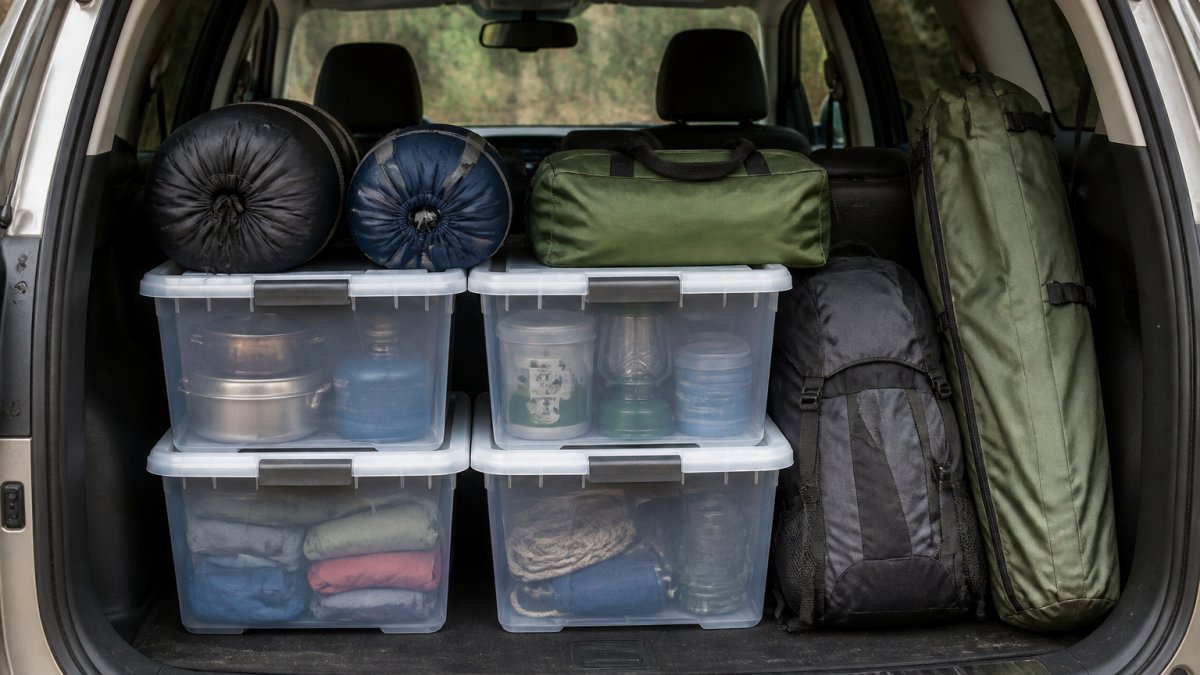
Packing a car for camping requires a logical sequence that adapts to your vehicle type and cargo volume. Load heaviest items first, keep frequently used gear accessible, and distribute weight evenly. This strategy maximises your cargo space, makes the journey safer, and ensures you can reach essentials without unloading everything at the campsite.
Step-by-Step Vehicle Loading Sequence
Follow this order to pack efficiently and safely:
Step 1: Load the heaviest items first. Place coolers, water containers, and large storage bins on the floor of your car, centred and toward the rear axle. Heavy items belong low and toward the centre to maintain stable handling and prevent rollover risk on winding roads. Never stack light items under heavy ones; that wastes space and risks damage to gear underneath.
Step 2: Layer mid-weight gear around the foundation. Once heavy items are secured, arrange mid-weight containers (cooking equipment bins, tool kits, first aid boxes) around them.
Step 3: Position sleeping bags and soft items on top. Sleeping bags, clothing, and pillows go on top, where they won’t be crushed by heavier gear.
Step 4: Secure the tent last, along the roof line or back wall. Place your tent (already packed in a compression bag) along the side wall or roof line of your cargo area.
Adapting Your Loading Plan to Vehicle Type
Different vehicles require different strategies:
Sedan or small hatchback: Prioritise vertical stacking and compression. Use packing cubes aggressively to reduce volume. Load the boot first, then use the back seat for lighter items. Consider a roof box or roof rack for bulky items like tents or extra sleeping bags. Keep your cooler on the back seat where it’s accessible and won’t crush softer gear.
SUV or wagon: You have more floor space, so spread weight across the entire cargo area rather than stacking high. Load heaviest items in the centre-rear, mid-weight items on the sides, and lighter items toward the front of the cargo bay. This distribution improves stability. Use the roof rack for items you won’t need until setup (tent, extra tarps).
Ute or truck: Load heavy items toward the cab to maintain traction and stability. Secure everything with cargo nets or bungee cords to prevent shifting during acceleration or braking. Keep frequently used items in the cab or in a toolbox mounted on the tray.
Securing Your Load
Use bungee cords, cargo nets, or ratchet straps to hold everything in place. Loose gear can damage other items, create safety hazards, and shift during cornering or sudden stops. Ensure nothing protrudes from your car where it could catch on branches or other obstacles. If you’re driving in wet conditions or carrying items sensitive to moisture, secure a tarp or weatherproof cover over your entire load.
An unsecured load can shift during driving, damaging gear and creating a safety hazard. Distribute weight evenly across the vehicle’s width and length, and secure all items firmly before departing.
Pack Camping Kitchen Gear and Food Supplies Strategically
Your camp kitchen is the heart of the camping experience. Pack kitchen gear and food supplies in a way that keeps everything accessible and prevents spills or contamination.
Use a dedicated cooler for perishables and a separate container for dry goods, spices, and cooking equipment. Keep utensils, plates, and cookware in a single bin so you’re not hunting through multiple bags when you’re hungry.
Place your cooler where it won’t tip during driving. Pack it last so it stays cool longer before you depart. Food supplies that don’t need refrigeration, pasta, rice, canned goods, spices, go in a labelled bin separate from your cooler.
Protect Your Gear from Weather and Damage in Transit
Weather protection and damage prevention start before you leave home and continue throughout your journey. A systematic approach keeps your gear dry, clean, and intact so it performs reliably at the campsite and lasts for many trips.
Waterproofing Your Gear
Wrap your tent in a waterproof bag or heavy-duty tarp before loading. Place sleeping bags in waterproof stuff sacks or compression bags designed for moisture protection. Use plastic bins with tight-fitting lids rather than open bags, which allow rain and dust to penetrate during transport or if your vehicle is parked in wet conditions.
For items sensitive to moisture, electronics, documents, first aid supplies, matches, medications, use waterproof cases or heavy-duty zip-lock bags. Store these inside a sealed plastic bin for double protection. A sudden downpour during transport or unexpected weather at the campsite shouldn’t ruin your trip.
Separating Wet and Dirty Equipment
Bring a dedicated waterproof bag or plastic bin for items that may get wet or dirty during the journey: muddy boots, damp towels, or gear used for setup. Keep this bin separate from your main storage so moisture doesn’t transfer to sleeping bags, clothing, or food supplies. Label it clearly so you know not to open it near your clean gear.
If you’re camping near water or in wet conditions, pack extra waterproof bags for items you’ll use at the campsite. Wet gear should be stored separately from dry gear to prevent cross-contamination and mould growth during transport home.
Protecting Fragile Items from Shifting and Damage
Fragile items, dishes, glassware, lanterns, camp stoves, require cushioning and secure placement. Wrap dishes and glasses in cloth, newspaper, or bubble wrap, then place them in a padded bin. Never stack heavy items on top of fragile gear. Position fragile items in the middle of your load, surrounded by softer items like sleeping bags or clothing that act as shock absorbers.
Secure all items firmly so nothing shifts during driving. Loose gear can damage other items and create safety hazards. Use bungee cords or cargo nets to hold bins in place, and ensure nothing protrudes from your car where it could catch on branches or other obstacles.
Creating a Measurable Protection Checklist
Before you depart, verify that each category of gear is protected:
- Tent: Packed in waterproof bag or compression sack? ✓
- Sleeping bags: In waterproof stuff sacks or compression bags? ✓
- Electronics and documents: In waterproof cases or sealed zip-lock bags? ✓
- Food and cooking supplies: In sealed containers away from moisture? ✓
- Fragile items: Wrapped and cushioned in a padded bin? ✓
- Wet or dirty items: In a separate waterproof bin, isolated from clean gear? ✓
- Entire load: Covered with a tarp if driving in wet conditions? ✓
This checklist ensures you don’t overlook protection for any category. Tick off each item before you close your car door.
Systematic weatherproofing and damage prevention, using waterproof bags, separating wet gear, cushioning fragile items, and securing your load, protects your investment and ensures gear performs reliably trip after trip.
Common Packing Mistakes to Avoid
Many campers repeat the same packing errors trip after trip. Overpacking is the most common mistake, bringing items you won’t actually use wastes space and adds weight. Before you pack anything, ask yourself honestly whether you’ll use it.
Packing items randomly rather than in categories creates chaos at the campsite. Without organisation, you’ll spend time searching for gear instead of enjoying your adventure.
Forgetting to protect gear from weather is costly. A wet sleeping bag or damaged tent ruins your camping experience. Finally, many people fail to keep frequently used items accessible, forcing them to unload everything when they need something simple like a torch or cooking pot.
Efficient packing transforms your camping trip from stressful to enjoyable. A solid packing system saves time, protects your gear, and lets you focus on the adventure ahead. CampNation’s premium camping equipment is built to withstand transport and real outdoor conditions, so once you’ve packed it properly, you can trust it will perform when you need it.
Frequently Asked Questions
What’s the most efficient way to pack camping gear for a trip?
Start by sorting gear into categories (shelter, sleep system, kitchen, clothing) and group similar items in clear bins or packing cubes. Place heavy items low and centre in your vehicle, then layer lighter gear on top. Keep frequently used items like cooking equipment and toiletries in a separate accessible container. This approach reduces search time at camp and maximises vehicle space.
How do I pack a tent and sleeping bag to save space?
Roll your sleeping bag tightly rather than stuffing it, then place it inside a compression bag if available. Disassemble your tent poles and store them separately in a padded bag. Pack the tent body, fly sheet, and pegs together in a waterproof stuff sack. Store these items vertically along the vehicle’s side wall to free up floor space for other camping essentials.
How should I organise camping gear before packing it in my car?
Lay out all your camping gear by category: shelter, sleep system, kitchen equipment, clothing, and safety items. Use clear plastic bins or packing cubes to group related items, labelling each container. This visibility helps you spot what you’ve forgotten, prevents overpacking, and makes loading your vehicle faster and more logical.
What should I pack first when loading a car for camping?
Pack heavy items first along the vehicle’s floor and centre, such as coolers, camp stoves, and water containers. Then layer medium-weight gear like sleeping bags and tents. Finally, place lighter items and frequently accessed gear on top or in easily reachable spots. This loading order keeps your vehicle balanced, protects delicate gear, and ensures you can access essentials without unpacking everything.