Last Updated: October 23, 2026
Quick Summary
Waterproof storage bags for camping keep sleeping bags, spare clothes and electronics dry by sealing them inside a bag with a reliable closure. Roll-top closures beat drawstring tops for water protection, and a bag needs at least three folds to seal properly. Match capacity to the item, from 2L for a phone to 90L for family bedding.
- Roll-top closures shed water even when briefly submerged, while drawstring tops are for organisation only.
- Three folds is the practical minimum for a roll-top seal; move up a size if you can only manage one.
- Stuffing a roll-top bag to bursting is the most common cause of leaks.
- A 40L roll-top dry bag covers clothing, a sleeping bag and toiletries for one weekend camper.
- Air-dry bags inside out in shade, since UV exposure breaks down coatings faster than anything else.
Table of Contents
- Why Waterproof Storage Bags for Camping Matter
- Quick Comparison: Best Waterproof Storage Bags for Camping
- Camping Dry Bags: Roll-Top vs Drawstring Closures
- Waterproof Duffel Bags for Gear, Tools and Bulk Kit
- Canvas Storage Bags for Camping: Where They Fit
- Waterproof Ratings and What They Actually Mean
- Choosing Capacity and Bag Dimensions
- How to Store Camping Gear Between Trips
- Frequently Asked Questions
Why Waterproof Storage Bags for Camping Matter
Water gets into everything.
The logic is simple. Your sleeping bag, spare clothes and electronics are the items that fail hardest when wet. A wet down bag loses loft and insulates poorly.
Here is the part most guides skip: not every bag sold as “waterproof” behaves the same way in the field. We cover all three below, along with capacity guidance and a storage routine for the weeks between trips.
Bushwalking and hiking safety guidance from the state parks services
Quick Comparison: Best Waterproof Storage Bags for Camping
Most pages that rank for this query are retailer category listings. They show you what is for sale, not which bag suits which job.
| Bag | Closure | Material | Strengths | Watch Out For |
|---|---|---|---|---|
| CampNation range | Varies by model | Durable outdoor-grade fabrics | Broad size range, quick shipping | Check the closure type on each model before buying, not every bag in the range is roll-top |
| Sea to Summit Dry Bags | Roll-top and drawstring options | Lightweight to heavy-duty | Wide size ladder, easy to find one that fits a pack side pocket | Drawstring models are for organisation, not immersion, read the label carefully |
| Watershed Ocoee | Roll-top | 840-denier UV-resistant nylon | Built for rough, exposed conditions; abrasion-resistant fabric | Heavier and bulkier than ultralight options, so less suited to fast backpacking |
| Ortlieb Dry-Bag | Roll-top | Watertight packcloth | Tested all-round protection with a proven closure | Premium price; overkill for car camping where rain is the only threat |
| Osprey Ultralight Dry Sack | Roll-top | Lightweight fabric | Excellent for wet-climate backpacking where every gram counts | Thin fabric punctures more easily; keep sharp items in a separate bag |
| Hyperlite 25L Stuff Sack | Roll-top | Lightweight packcloth | Ideal for sleeping bags and quilts; compresses well | Limited capacity range, not a family or group option |
| Pelican ExoDry | Roll-top | Budget-oriented build | Entry-level dry storage at a low cost | Basic seam treatment; fine for rain, not for river crossings |
Prices vary by model and size, so check current pricing on each product page rather than relying on a single figure. The more useful comparison is closure and construction, because that is what decides whether a bag keeps water out.
Buy one bag slightly larger than you think you need for your sleeping bag. A bag packed tight has no room for the roll-top to fold over properly, and a closure that cannot roll three times is not sealing.
Camping Dry Bags: Roll-Top vs Drawstring Closures
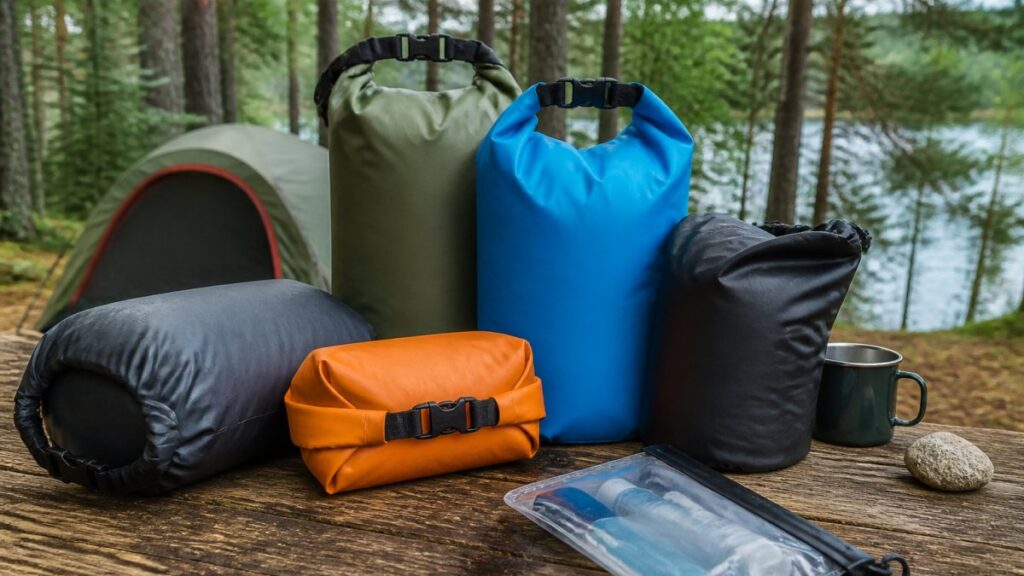
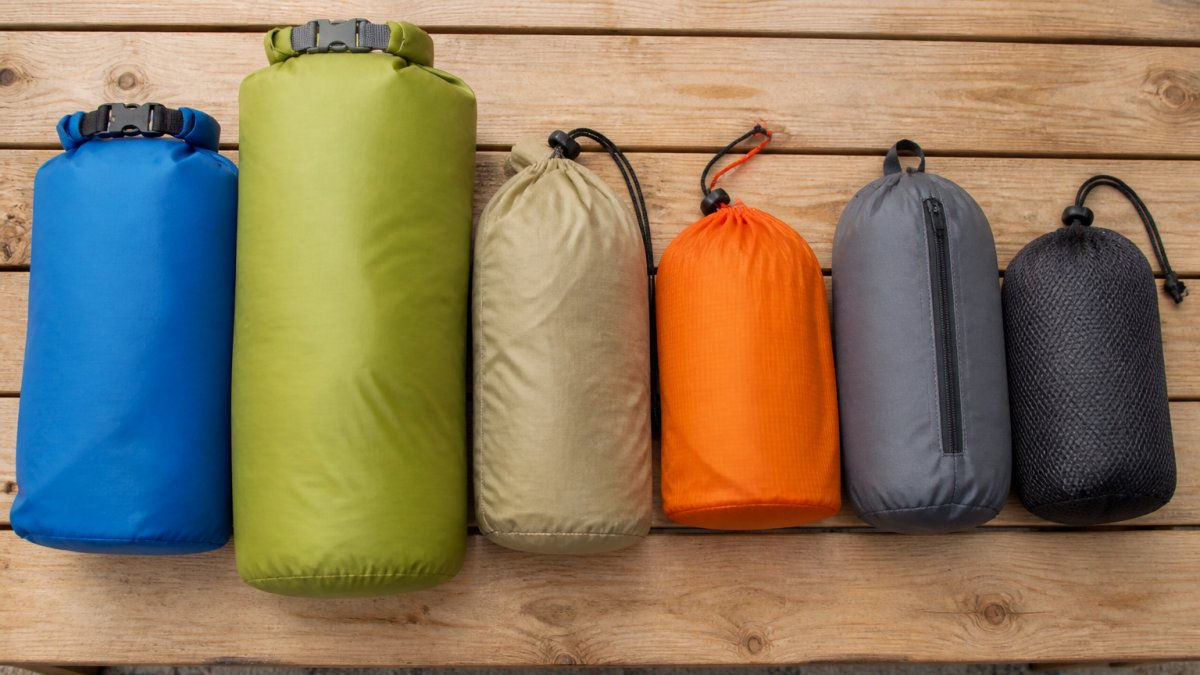
Roll-top closures win on water protection, full stop. A roll-top bag folds the opening over itself several times and clips shut, creating a mechanical seal that sheds water even when submerged briefly.
That distinction matters more than fabric choice. A heavy-duty bag with a drawstring top will still let water in through the gathered opening.
How many rolls is enough? Three folds is the practical minimum. Below that, the seal is unreliable.
Stuffing a roll-top bag to bursting is the most common cause of leaks. The closure cannot fold, water seeps through the gap, and campers blame the bag rather than the packing.
Waterproof Duffel Bags for Gear, Tools and Bulk Kit
Waterproof duffel bags handle the bulky items that dry sacks cannot: camp chairs, cooking gear, tool rolls, boots and wet-weather clothing.
Where duffels earn their place is vehicle cargo storage and 4WD storage. Tossing muddy boots and wet tarps into an open tub means the whole load gets damp.
Look for these when comparing waterproof duffel bags:
- Roll-top or taped zip closure rather than a standard zip with a flap
- Reinforced base because duffels get dragged, not carried
- Shoulder straps and grab handles for two-person lifting when loaded
- Capacity in the 40L to 90L range for family or group kit
A duffel that is waterproof on paper but has an unprotected zip will fail in sustained rain. Check the closure before the fabric.
Canvas Storage Bags for Camping: Where They Fit
Canvas storage bags for camping are not waterproof in the sealed sense, and pretending otherwise leads to wet gear. What canvas does well is breathe, resist abrasion and handle dust and mud.
Use canvas for:
- Dry, ventilated storage at home between trips
- Dust and mud protection in a vehicle or shed
- Tools and hardware that would puncture a thin dry sack
- Carrying dry kit on short trips where rain is unlikely
Water-resistant canvas, often treated with wax or a coating, handles light drizzle and splashes. It will not survive a soaked tent floor or a river dunking. Pair canvas bags with dry sacks inside for anything that must stay truly dry.
Care and cleaning guidance for outdoor equipment fabrics
Waterproof Ratings and What They Actually Mean
Waterproof ratings are usually expressed as a hydrostatic head figure in millimetres: the height of a water column a fabric can hold before it leaks. A higher number means more resistance to sustained water pressure. A lower number means the fabric handles rain but not standing water or pressure.
Most camping bags do not publish a rating at all. When a rating is missing, judge by construction instead:
- Closure type: roll-top beats drawstring, sealed zip beats standard zip
- Seam treatment: taped or welded seams beat stitched seams
- Fabric weight: heavier denier fabric resists abrasion and pressure better
- Coating: polyurethane or TPU coatings add a water barrier
Closure and construction trade-offs
The closure is where most bags fail, and it is the part retailers rarely explain. Here is how the main designs compare in the field.
- Roll-top: the most reliable closure for rain and brief immersion. The opening folds over itself three or more times and clips shut, creating a mechanical seal. The trade-off is access, you must unroll the whole top to reach anything, and the bag needs spare fabric at the top to fold. A roll-top packed to bursting cannot seal.
- Sealed or taped zip: convenient access and good rain protection when the zip is protected by a storm flap and the seams are taped. The trade-off is cost and maintenance; grit in the zip track or a worn flap lets water through, and zips are the first thing to fail on a heavily used bag.
- Drawstring: fine for organising kit inside a pack, but not a water barrier. The gathered opening lets water in under pressure. Use drawstring bags for dry storage and pack separation, not for exposed use.
- Welded seams: stronger and more watertight than stitched seams because there are no needle holes to seal. The trade-off is repairability, a welded seam is harder to field-repair than a stitched one.
A common pattern in the field is a bag with a high fabric rating and a poor closure leaking, while a bag with a modest fabric rating and an excellent roll-top closure stays dry. Closure first, fabric second.
What the numbers do not tell you
A hydrostatic head figure describes the fabric, not the finished bag. It says nothing about the seams, the closure or the coating at the base where abrasion is worst. Two bags can share the same fabric rating and behave completely differently after a season of use. When a rating is published, treat it as one input among several rather than a guarantee.
A bag with a high fabric rating and a poor closure will leak. A bag with a modest fabric rating and an excellent roll-top closure will usually stay dry. Closure first, fabric second.
Outdoor equipment fabric and waterproofing guidance
Choosing Capacity and Bag Dimensions
Match capacity to the item, not to the trip. Oversized bags waste pack space and let contents shift; undersized bags cannot seal properly.
| Item | Suggested Capacity |
|---|---|
| Phone, wallet, headlamp | 2L to 5L |
| Spare clothes for one person | 10L to 15L |
| Sleeping bag | 15L to 25L |
| Sleeping bag plus clothing | 25L to 40L |
| Group cooking kit | 40L to 60L |
| Family clothing and bedding | 60L to 90L |
Dimensions matter as much as litres. A tall, narrow bag slides into a pack side pocket; a wide, flat bag fits under a seat or across a vehicle floor. Measure the space you intend to fill before buying.
Weekend campers who want one bag per person: a 40L roll-top dry bag covers clothing, a sleeping bag and toiletries with room to spare.
How to Store Camping Gear Between Trips
Storing camping gear well is the difference between a bag that lasts seasons and one that fails on the second trip. The routine is straightforward, and skipping it is the most common reason gear degrades.
- Empty every bag completely and check for damp items at the bottom
- Air-dry bags inside out in shade, never in direct sun
- Clean mud and dust with a damp cloth, not detergent
- Check closures for grit that stops a roll-top sealing
- Store bags open and loosely folded, not compressed
UV exposure breaks down coatings faster than anything else. Drying in shade rather than sun adds years to a bag’s life.
Product care guidance for camping and outdoor equipment
Frequently Asked Questions
What type of bag is best for keeping camping gear dry?
A roll-top dry bag is the most reliable choice for gear that must stay dry, because the closure folds over and clips shut to seal out water. For bulky kit like sleeping bags and clothing, use a roll-top dry bag in the 20L to 40L range. For tools, boots and cooking gear, a waterproof duffel bag with a sealed zip or roll-top opening works better. Canvas storage bags for camping suit dry storage at home, not wet conditions.
Are dry bags completely waterproof?
Most dry bags are waterproof when the closure is sealed correctly, but the rating depends on construction. Roll-top bags with welded seams and coated fabric keep water out during rain and splashes, and some handle brief submersion. Drawstring dry bags are usually water-resistant rather than fully waterproof. Check the stated rating and always roll the top at least three times before clipping it closed.
What size waterproof bag do I need for camping?
Match capacity to what you are packing. A 15L bag holds a day’s clothing or a small sleep system, 25L suits a quilt or sleeping bag, and 40L handles a full weekend kit or a family’s shared clothing. For vehicle cargo storage and 4WD trips, larger duffels in the 60L to 90L range work well. Measure your bulkiest item before buying so the bag closes comfortably.
Are canvas storage bags suitable for wet camping conditions?
Canvas storage bags for camping are breathable and tough, which makes them good for organising gear at home or in a caravan. They are not the right choice for wet conditions, because canvas absorbs water and dries slowly. Use a waterproof dry bag or TPU-lined sack inside the canvas bag, or switch to a roll-top dry bag for anything that must stay dry on a rainy trip.
How should you clean and dry a camping dry bag?
Empty the bag, wipe the inside with mild soapy water, and rinse thoroughly. Never machine wash or tumble dry a coated dry bag, as heat damages the waterproof layer. Hang it open in the shade with the closure unrolled so air circulates inside. Store it loosely folded rather than compressed, and check the seams and coating each season for cracks or peeling before your next trip.
The challenge is not buying a bag. It is buying the right closure, the right capacity and the right material for how you actually camp, then storing it well enough that it performs when the weather turns. At CampNation, we stock premium quality gear built to last outdoors, selected for reliability and performance, with quick and reliable shipping so it arrives before your next trip. Browse our waterproof storage bags for camping and pack for the conditions, not the forecast.