Last Updated: November 1, 2026
Quick Summary
Lightweight sanitation for trekking means carrying a small, reliable core kit: hand sanitiser or unscented soap, quick-drying cleaning cloths, basic first aid, a trowel and waste bags. These items protect your skin, your water and the campsites you share, and they can be packed in a few small bags with little weight.
- Carry hand sanitiser or unscented soap, quick-drying cleaning cloths, first aid, a trowel and waste bags.
- Dig a cathole 15 to 20 centimetres deep, at least 60 to 70 metres from water, trails and campsites.
- Pack out used toilet paper in a sealed bag where rules or terrain require it.
- Wash at least 30 to 60 metres from any water source and scatter grey water widely.
- Match your kit to trip length, climate and group size, and test it on a shorter walk first.
Table of Contents
- Backpacking Hygiene Essentials for Multi-Day Trips
- Portable Camping Shower Options and Water Trade-Offs
- Water Storage, Filtration and Washing Without Waste
- Building a Trekking Toilet Kit That Fits in Your Pack
- Leave No Trace Toilet Practices and Waste Disposal
- Choosing Your Kit by Trip Length, Climate and Group Size
- Frequently Asked Questions
Most packing lists spend three lines on hygiene and two hundred words on the stove, yet lightweight sanitation gear is one of the most useful things to plan carefully. That imbalance is the problem. On a multi-day trek, poor sanitation is one of the fastest ways a trip goes wrong, and lightweight sanitation solutions for trekking are often the first thing a careful packer gets right. People often plan carefully for shelter and food, then discover on day two that they have nothing to clean a wound, wash their hands, or deal with waste properly.
Here is the core argument of this guide. Sanitation gear is not a luxury add-on. It protects your skin, your water supply, and the campsites you share with other walkers. The good news is that you do not need heavy kit to do it well.
Trail hygiene carries a real health dimension. Clean hands and clean water prevent the gastrointestinal illnesses that ruin trips and, in remote areas, can turn into emergencies. Skin care matters too.
There is also a responsibility angle that most guides skip. Every walker who leaves waste on the surface, or who washes directly in a creek, adds to a cumulative impact on the land.
Many trekkers assume they will simply sort it out at camp. In practice, that rarely works. Water sources can be silty, waste disposal options are limited, and the weather decides whether anything dries. The walkers who handle this well are the ones who planned for it before the first step.
Watch out: the most common error is packing a full-size toiletry bag. Every item you do not need adds weight you carry for every kilometre.
Backpacking Hygiene Essentials for Multi-Day Trips
Good trail hygiene starts with a short, reliable core kit. For most multi-day trips, that means hand sanitiser or a small bottle of unscented soap, a few quick-drying cleaning cloths, a basic first-aid supply for cuts and blisters, and a compact supply of wet wipes for the body.
Quick-drying, reusable cleaning cloths are worth the space. They rinse clean, dry fast on the outside of a pack, and handle everything from face washes to wiping down cookware. Many trekkers find that two cloths, one for the body and one for the kitchen, cover the whole trip.
Skin care deserves its own attention. Sweat, friction and sun exposure cause most trail skin problems. Carry an anti-chafe product and a simple moisturiser. Change your socks daily where you can, and let your feet air out at lunch stops. These habits do more for comfort than any single product.
Your hygiene kit should match the trip length. A two-night walk needs far less than a ten-day traverse, where you will want a fuller routine and a plan for resupply. Plan your quantities around the number of days, not the number of items you like.
Portable Camping Shower Options and Water Trade-Offs
A portable shower is the most debated item in trail sanitation, and the honest answer is that it depends on your water access and your priorities. Two broad types dominate: lightweight hanging shower bags that you fill and hang from a branch, and pump-based systems that run on a battery and push water through a nozzle.
Hanging bags are the simplest. A lightweight option like this hanging shower bag packs small and weighs very little. A pump-based shower offers more control and a steadier flow, but it adds weight, needs charging, and draws more water from your supply.
The main trade-off is water. Every shower uses water you may need for drinking and cooking. On arid or high-altitude routes, that cost is significant.
Consider the terrain before you buy. Pump systems are more practical for car camping and base-camp setups than for ultralight traverses. Hanging bags suit most backpacking trips. Choose based on how far you carry, how often you reach water, and how much you value a proper rinse.
Water Storage, Filtration and Washing Without Waste
Water is the foundation of trail sanitation, and it is where many trekkers cut corners. You need three things: somewhere to store water safely, a way to make it drinkable, and a way to wash without polluting the source. Each has its own equipment and its own compromises.
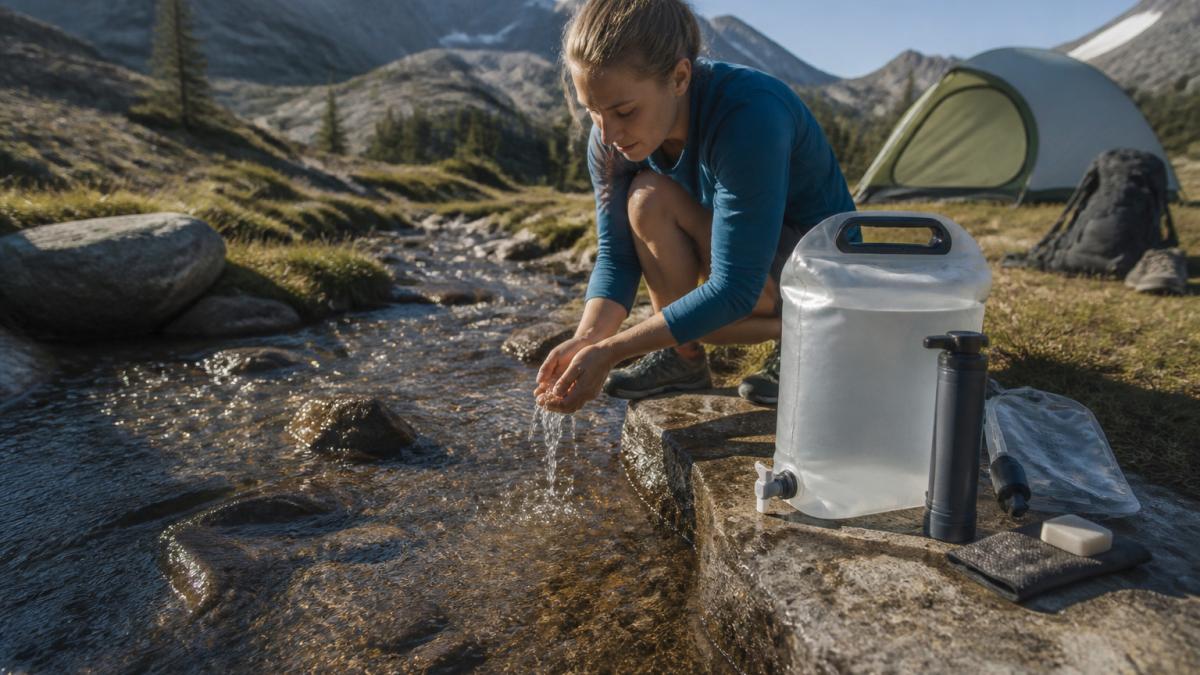
For storage, a lightweight collapsible container lets you carry extra water when a source is far apart, then fold it flat when empty. Choose one with a wide mouth for easy filling and a clear marker for volume.
For filtration, personal squeeze filters and gravity bags are the most common options for trekking. Squeeze filters are light and fast for one person, while gravity systems handle more water when you are filling for a group.
Washing without waste means keeping soap and sanitiser well away from streams and lakes. Use a small container of water at least 30 to 60 metres from any source, rinse your hands and cloths there, and scatter the grey water widely. Most trekkers find this habit becomes automatic after a few days.
Watch out: running a filter through turbid water without pre-filtering can clog it quickly. A simple cloth pre-filter extends its life considerably.
Building a Trekking Toilet Kit That Fits in Your Pack
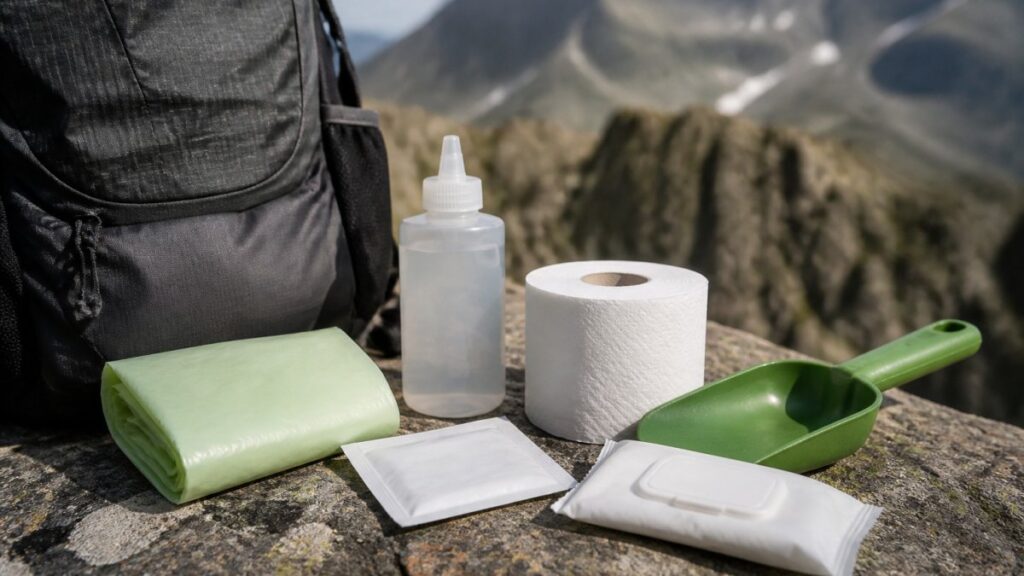
A trekking toilet kit covers the basics of personal waste management: a small trowel for digging a cathole, waste bags for carrying out used paper and sanitary items, and a compact supply of toilet paper or a paper alternative.
A purpose-built trowel is the first item to get right. Lightweight trowels are designed to dig a cathole quickly in most soils without bending or breaking, which matters when the ground is rocky or compacted.
Waste bags deserve careful selection. Pick certified, durable bags that will not tear in your pack, and carry a few more than you think you need. Some trekkers use a small waterproof pouch for used items so odours stay contained until they can be disposed of properly.
Keep the kit together in one pouch. A dedicated bag stops items getting lost in the bottom of your pack and makes the routine quicker and more hygienic.
The right kit is a matter of personal preference and the rules of the area you walk. Some routes require you to carry all waste out, and others have toilet facilities at set points.
Leave No Trace Toilet Practices and Waste Disposal
Leave No Trace is the framework most outdoor organisations use for minimal-impact travel, and its toilet guidance is the most practical part.
Where the ground is too rocky, too wet, or too close to a water source, you may need to carry out your waste instead. In high-use or sensitive areas, many land managers require this.
Toilet paper needs care. Pack it out in a sealed bag rather than burying it, since it decomposes slowly in many environments.
Good practice here protects both the land and the people who follow you. A few minutes of care at each stop is a small cost for keeping trails pleasant and water sources safe.
Before you go, check the specific rules for the area you plan to walk. Requirements differ between parks, and what is acceptable on one route may be prohibited on another. Read the local guidance and plan your waste approach around it.
The table below summarises the core waste-disposal rules the article sets out, so you can check them quickly before you walk.
| Situation | Recommended action | Key detail |
|---|---|---|
| Digging a cathole | Dig 15 to 20 cm deep | Cover fully when finished |
| Distance from water | At least 60 to 70 metres | Also away from trails and campsites |
| Ground too rocky or wet | Carry waste out instead | Use a sealed waste bag |
| Toilet paper | Pack out in a sealed bag | Decomposes slowly, so do not bury |
| Sensitive or high-use areas | Carry all waste out | Often required by land managers |
| Local rules | Check before setting off | Requirements differ by park and country |
Choosing Your Kit by Trip Length, Climate and Group Size
No single kit suits every trek. The right combination depends on how many days you walk, what conditions you expect, and whether you are alone or with others.
For short trips of one to three nights, a minimal kit works well: hand sanitiser, a few cleaning cloths, a basic first-aid supply, a trowel, and waste bags. You can usually carry everything without planning resupply.
For longer walks of five days or more, add a fuller hygiene routine, extra waste bags, and a more capable water system. Plan where you will refill water and whether you can source supplies along the way.
Climate changes the equation. In hot, dry country, water becomes precious, so favour a light cloth routine over a full shower.
Group size matters for water and filtration.
Weight and packed size should drive your final choices. Compare items on weight and volume, not just price, and aim for the smallest kit that covers your real needs.
Frequently Asked Questions
What sanitation items should you pack for a multi-day trek?
A multi-day trek usually needs hand sanitiser or soap, a few biodegradable wipes, a small quick-drying cloth, a trowel for cathole digging, sealed waste bags and a compact toiletry bag. Keep the set light and compact, and pack only what your route, climate and group size require. Check the rules for the park or track you are visiting, since some areas require specific waste handling or prohibit certain products. Packing a small amount of each item in a dedicated kit keeps the load manageable and makes routine cleaning easy to repeat each day on the trail.
How do you stay clean while trekking with limited water?
Focus on spot cleaning rather than full washing. Use a small amount of biodegradable soap on a quick-drying cloth to wipe hands, face, underarms and feet, then rinse with a measured splash of water. Wet wipes and alcohol-based hand sanitiser cover much of the hygiene need without water. Keep water use for drinking and cooking first, and wash away from water sources and at least 60 metres from streams or lakes, as recommended under Leave No Trace guidance. Carrying a small, labelled bottle of washing water helps you measure use each day.
How should you dispose of human waste while hiking?
Where toilets are not provided, dig a cathole about 15 to 20 centimetres deep, at least 60 metres from water, tracks and camp sites. Use a trowel, deposit waste, then cover it with soil. Pack out used toilet paper and wipes in a sealed waste bag rather than burying them, since most wipes do not break down. Some Australian parks prohibit burial in certain zones, so check the local park rules before you set off and follow any instructions from the land manager.
Are biodegradable soap and wipes suitable for trekking?
Biodegradable soap breaks down more readily than conventional soap, but it still affects water quality if used near streams or lakes. Use it sparingly, away from water sources, and rinse at least 60 metres from the water. Biodegradable wipes are not the same as flushable wipes; many still take a long time to break down, so pack them out in a sealed bag. Read product labels carefully, because some claims are marketing terms rather than verified breakdown standards.