Table of Contents
- Snowys vs BCF Camping Gear: What Actually Sets Them Apart
- Snowys vs BCF Prices: What You Pay and What You Get
- Range, Brands and Product Availability at Each Retailer
- Tent and Sleeping Bag Comparison: Sizing, Ratings and Materials
- Best Camping Gear for Beginners: Where to Start Without Overspending
- Shipping, Click-and-Collect, Returns and Warranty Handling
- Who Each Retailer Suits: A Shopper-by-Shopper Breakdown
- Conclusion: Choosing the Right Camping Gear Retailer
- Frequently Asked Questions
Last Updated: October 16, 2026
Snowys vs BCF Camping Gear: What Actually Sets Them Apart
Snowys vs BCF camping gear comes down to two retail models. Snowys is a specialist retailer with deep category range and staff who camp. BCF is a large-format chain with national reach and frequent catalogue promotions.
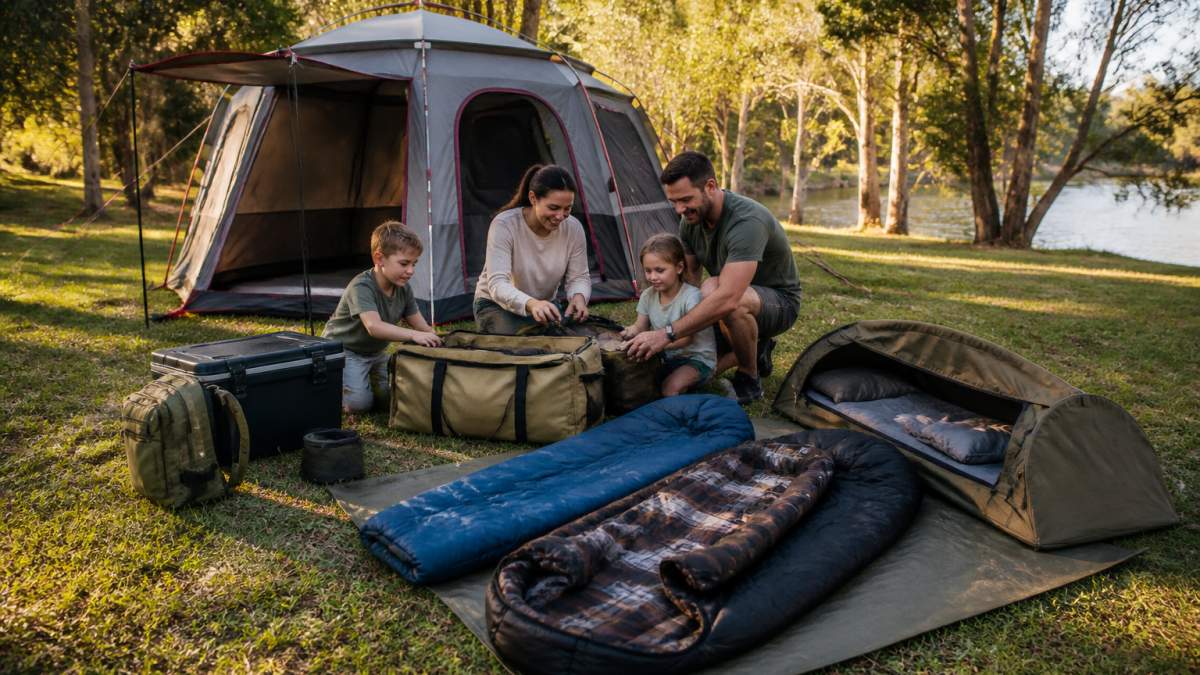
Both stock overlapping products but solve different problems: one optimises for range depth and expert advice, the other for volume, convenience and price-led promotions.
Here’s the short version:
- Snowys is best for campers who want specialist advice, a wide brand range and gear matched to specific conditions.
- BCF is best for shoppers who want one-stop convenience, national store coverage and catalogue-driven deals.
- CampNation suits buyers who want premium, carefully selected gear built for remote trips, backed by quick and reliable shipping.
Specialist retailers win on range and advice. Big-box chains win on convenience and promotional pricing. Match the retailer to your trip, not the other way around.
Snowys vs BCF Prices: What You Pay and What You Get
Price is where the two diverge most. BCF leans on catalogue specials, club member pricing and short-window promotions.
Neither is automatically cheaper. A chain’s promotional tent might beat a specialist’s everyday price, but the specialist often stocks a higher-spec model at that price, with better fabrics, poles and warranty.
What you are actually paying for breaks down like this:
| Factor | Specialist Retailer | Big-Box Chain |
|---|---|---|
| Pricing style | Consistent, fewer deep discounts | Frequent catalogue and member specials |
| Range depth per category | Deep, multiple brands and specs | Broad but shallower per category |
| Advice quality | Staff who camp and can compare specs | Variable by store and roster |
| Best for | Buyers who research before committing | Buyers chasing a deal this weekend |
The trap is comparing a cheap chain tent against a premium specialist tent and concluding one retailer is “expensive”. Compare like for like: same capacity, fabric, pole material and warranty.
How to run a fair price comparison
A fair comparison uses the same category, capacity and materials:
- Pick one category and one size. For example, a four-person dome tent or a three-season sleeping bag rated to roughly 0°C.
- Match the specification. Compare fabric denier and coating, pole material (aluminium versus fibreglass), sleeping bag fill (down versus synthetic) and temperature rating, and stove output in megajoules per hour.
- Add the delivery cost. A lower sticker price can be wiped out by a delivery fee, especially on bulky items such as tents, swags and fridge slides. Check free-delivery thresholds.
- Check price-match and promotion terms. Price-match policies usually exclude marketplace sellers, clearance lines, member-only prices and out-of-stock items. Read the exclusions first.
- Factor in warranty and returns cost. A cheaper item with a short warranty and restocking fee can cost more over its life than a dearer item with a longer warranty and free returns.
Where each retailer tends to win on price
- Entry-level and family campsite gear: the big-box chain’s catalogue and member specials are hard to beat on headline price, especially during seasonal sales.
- Mid-range and specialist gear: the specialist often stocks a better-specified product at a similar price, so the value gap narrows once you compare materials and warranty.
- Premium and technical gear: the specialist and premium online retailers carry higher-spec models that general chains rarely stock, so there is less direct price competition.
The most common mistake is buying on headline price alone. A tent that saves money upfront but fails in wind or rain costs far more in replacement and ruined trips. Always compare the specification and the warranty, not just the number on the tag.
A practical way to compare total cost
Add the sticker price, delivery fee, any accessories needed to make the item usable, and the expected replacement interval. A cheap tent replaced every second season can cost more over five years than a better-built tent bought once.
Australian Competition and Consumer Commission guidance on pricing and advertising explains your rights when a advertised price or promotion turns out to be misleading.
Range, Brands and Product Availability at Each Retailer
Range is the clearest dividing line. A specialist carries multiple brands within a category, so you can compare a three-season tent against a four-season one side by side.
Availability differs by channel. Chain stores often have floor stock you can walk out with today. Specialists hold deeper online stock but rely on shipping or click-and-collect for less common sizes and specs.
How the range differs by category
- Tents: the specialist stocks a deeper ladder of models per capacity, from entry-level domes to four-season and expedition tents. The chain carries fewer models per capacity, weighted to family and weekend use.
- Sleeping bags and mats: the specialist carries the full temperature range, including bags rated well below 0°C and mats with a stated R-value. The chain clusters around three-season and summer ratings.
- Swags and stretchers: both carry swags, but the specialist is more likely to stock the full size range plus matching stretchers, poles and canvas care.
- Camping stoves and cooking: the chain is strong on popular two-burner gas stoves and portable barbecues. The specialist is more likely to carry liquid-fuel and multi-fuel stoves for remote trips.
Brands and product tiers
Both carry house and third-party brands. The practical difference is the shape of the range:
- Entry-level: both cover this tier, but the chain’s volume buying tends to produce sharper prices on high-turnover items.
- Mid-range: the specialist often stocks a better-specified product at a similar price, so the value gap narrows once you compare materials and warranty.
- Premium and specialist: the specialist and premium online retailers carry higher-spec models that general chains rarely stock, so there is less direct overlap.
Availability, stock and fulfilment
Availability is not just what is listed online, it is whether the item is in stock, where it ships from, and how fast it reaches you:
- In-store stock: the chain’s national network means you can often walk out with common items the same day, critical for bulky gear such as tents, swags and fridge slides, where delivery is slow and expensive.
- Online stock depth: the specialist often holds deeper online stock of less common sizes and specifications, which is where the chain’s range thins out.
- Click-and-collect: both offer it, but the chain’s larger footprint means a shorter drive to pickup. The specialist’s pickup points are fewer, so shipping is often the practical option.
- Special orders: for niche specifications such as four-season tents or expedition sleeping bags, the specialist is more likely to offer a special order or backorder rather than listing the item as unavailable.
What this means for your trip
For a family campsite setup, either works and the chain’s convenience usually wins. For backcountry or cold-climate trips, specialist range matters more, because the temperature ratings and materials you need rarely appear in a general chain.
Australian Government guidance on consumer guarantees sets out your rights if an item arrives damaged, is not as described, or fails to do what it was sold to do.
Tent and Sleeping Bag Comparison: Sizing, Ratings and Materials
Tent and sleeping bag comparison is where specifications decide the purchase, not brand loyalty. A four-person tent is comfortable for two adults with gear, not four.
Key specs to compare:
- Tent capacity: match to sleepers plus gear, not sleepers alone
- Fabric and coating: determines weather resistance and breathability
- Pole material: aluminium is lighter and stronger than fibreglass
- Sleeping bag temperature rating: match to the coldest night you expect, not the average
Sleeping systems matter as much as the bag.
For winter, a bag rated well below your expected minimum is safer.
Australian Competition and Consumer Commission product safety guidance is worth checking before buying any camping equipment, particularly for gas appliances and portable stoves.
Best Camping Gear for Beginners: Where to Start Without Overspending
Best camping gear for beginners starts with three items: shelter, sleep and cooking. Everything else is optional until you know how you camp. Beginners overspend on gadgets and underspend on the sleeping system, the biggest comfort factor.
Start here:
- A tent sized one person larger than your group
- A sleeping bag rated below your expected minimum temperature
- An insulating sleeping mat with a stated R-value
- A simple two-burner camping stove for family trips, or a single burner for solo
Buy shelter and sleep well, go cheap on accessories until you know what you need. A beginner does not need a four-season tent for a summer family campsite.
Buy your sleeping mat before your sleeping bag. A great bag on a cold mat still leaves you cold. A modest bag on a good mat often sleeps warmer.
Shipping, Click-and-Collect, Returns and Warranty Handling
Shipping and after-sales service separate the two as much as range does. Chains offer national store networks for click-and-collect, suiting buyers who want gear today.
Returns and warranty handling show differences over time. Chain returns are usually straightforward for unused items with a receipt.
At CampNation, we provide carefully selected products for reliability and performance, and quick and reliable shipping so your gear arrives before your trip, not after.
Before buying, confirm three things:
- The return window and condition requirements
- Who handles warranty claims, the retailer or the brand
- Expected delivery time against your trip date
Who Each Retailer Suits: A Shopper-by-Shopper Breakdown
Who each retailer suits depends on how you camp, not which is “better”. There is no single winner, and any guide claiming one is oversimplifying.
| Shopper type | Best fit | Why |
|---|---|---|
| Weekend camper, family campsite | Big-box chain | Convenience, walk-out stock, catalogue deals |
| Backcountry or cold climate tripper | Specialist retailer | Deeper range, better spec matching |
| Beginner, first setup | Either, with research | Buy shelter and sleep well, skip gadgets |
| Off-grid or van-life buyer | Specialist or premium online | Portable power and smart add-ons need range |
| Deal-driven buyer | Big-box chain | Frequent promotions and member pricing |
| Quality-first buyer | Premium online retailer | Selected gear built to last, reliable shipping |
For buyers who want gear that lasts beyond a couple of trips, the priority is spec and build quality, not the retailer’s logo.
Australian Government guidance on consumer guarantees sets out your rights when a product fails, regardless of which retailer you buy from.
Conclusion: Choosing the Right Camping Gear Retailer
The hard part is not choosing a retailer, it is knowing which specifications matter for your trip, and most shoppers never get a straight answer on that.
CampNation provides premium quality gear built to last outdoors, carefully selected products for reliability and performance, and quick and reliable shipping so it arrives in time. We also provide smart add-ons and portable power options for off-grid and van-life setups, not just tents and sleeping bags.
Shop Now and gear up for your next trip with equipment you can trust in real conditions.
Frequently Asked Questions
Which is better for camping gear, Snowys or BCF?
It depends on what you need. BCF suits shoppers who want a wide national footprint, frequent specials and gear for family campsites and day trips. Snowys appeals to campers chasing more specialised equipment, such as canvas swags and higher-spec sleeping systems, backed by detailed buying advice. Compare the specific product, its temperature rating, materials and warranty terms rather than the brand name on the door. Try both ranges against your trip type before deciding.
How do Snowys and BCF compare on camping gear prices?
Neither retailer is uniformly cheaper. BCF runs frequent catalogue and member specials, which can bring entry-level tents and stoves down sharply, while Snowys often competes on mid-range and premium gear where build quality matters more than the sticker price. Factor in shipping thresholds, click-and-collect availability and warranty handling, because these change the total cost. Check current prices directly with each retailer, as camping gear pricing shifts with seasons and promotions.
What should you compare before buying camping gear?
Start with the trip itself: how many people, how many nights, and whether you are car camping or walking in. Then compare tent capacity and packed size, sleeping bag temperature rating and fill type, stove burner count and heat output, and fridge or ice box volume. Check durability details such as canvas weight, waterproof ratings and pole materials. Finally, weigh up shipping speed, returns policy and warranty handling, since these decide how painless a problem becomes later.
Can you buy good-quality camping gear on a budget?
Yes, if you prioritise the items that affect comfort and safety. Spend more on your sleeping system and shelter, where a poor temperature rating or weak weather resistance ruins a trip, and save on chairs, tables and storage. Entry-level tents from large retailers handle summer camping at established campsites well. For winter camping or remote backcountry trips, step up to better materials and stronger poles. Buy once for the conditions you actually camp in.