Table of Contents
- What Counts as Lightweight Camping Gear for Hiking
- Quick Comparison: Lightweight Gear Categories and Weight Ranges
- Packs, Shelters and Cook Systems: What to Look For
- Choosing the Best Lightweight Sleeping Bag for Backpacking
- Tips for Reducing Base Weight Without Losing Comfort
- Ultralight Hiking Gear Checklist for Multi-Day Trips
- Common Mistakes When Buying Lightweight Camping Gear
- Conclusion: Matching Gear Weight to Your Trip
- Frequently Asked Questions
Last Updated: October 8, 2026
What Counts as Lightweight Camping Gear for Hiking
Lightweight camping gear for hiking is equipment chosen so your pack carries you, not the other way around.
The best lightweight camping gear for hiking usually means a total pack weight, including food and water, that you can carry comfortably for hours without stopping to adjust straps every few minutes. There is no single magic number. A fit walker in their twenties and a weekend camper in their fifties will draw that line in different places.
What matters is the principle. Every gram you remove from your back is a gram you do not lift on the tenth kilometre. The Leave No Trace Australia guidance on planning ahead makes the same point: the lighter your load, the more likely you are to travel carefully and leave the track as you found it.
Lightweight does not mean fragile. It means every item earns its place.
Quick Comparison: Lightweight Gear Categories and Weight Ranges
The table below shows typical weight ranges for the main gear categories. Use it as a starting point, not a rulebook, because your trip length and climate will shift these numbers.
| Category | Typical Weight Range | What Drives the Weight | Best For |
|---|---|---|---|
| Backpack | 1-2 kg | Fabric denier, frame type | Overnight to multi-day |
| Shelter | 0.8-2 kg | Freestanding vs trekking pole | Exposed or sheltered sites |
| Sleeping bag | 0.6-1.4 kg | Fill type, temperature rating | Three-season walking |
| Sleeping mat | 0.3-0.7 kg | Foam vs inflatable | All trips |
| Cook system | 0.3-0.8 kg | Fuel type, pot size | Overnight to multi-day |
A common mistake is chasing the lowest number in every row. A shelter that saves weight but flaps in wind will cost you sleep, and tired hikers make poor decisions.
Buying the lightest option in every category often backfires. A pack rated below its real load limit will sag, and a sleeping bag pushed past its comfort rating will leave you cold. Match the rating to your actual trip, not the brochure.
Packs, Shelters and Cook Systems: What to Look For
These three categories decide whether your trip feels easy or exhausting. Get them right and everything else falls into place.
Packs: Volume, Carry Comfort and Fabric Denier
Volume should match your trip length. A 40-50 litre pack suits most overnight walks, while multi-day trips usually need 55-65 litres. Carry comfort matters more than the spec sheet suggests, so try a pack loaded before you commit.
Fabric denier tells you how tough the material is. Lower denier means lighter fabric, but also less resistance to abrasion from rock and scrub. For rough terrain, a slightly heavier fabric often lasts longer than an ultralight shell.
Shelters and Cook Systems: Where Weight Adds Up Fast
Shelters split into two broad types. Freestanding tents hold their shape without stakes, which helps on hard ground. Trekking pole shelters save weight but need good staking points and a bit of practice to pitch.
Cook systems are simpler. A small canister stove and a single pot cover most needs. The Bushwalking Australia safety and trip planning resources recommend carrying a backup ignition source, because a failed lighter at dinner time is a real problem on a remote track.
Choosing the Best Lightweight Sleeping Bag for Backpacking
The best lightweight sleeping bag for backpacking balances warmth, packed size and fill type. Down fill packs smaller and warmer for its weight, but loses insulation when wet. Synthetic fill handles damp conditions better and costs less, though it is bulkier.
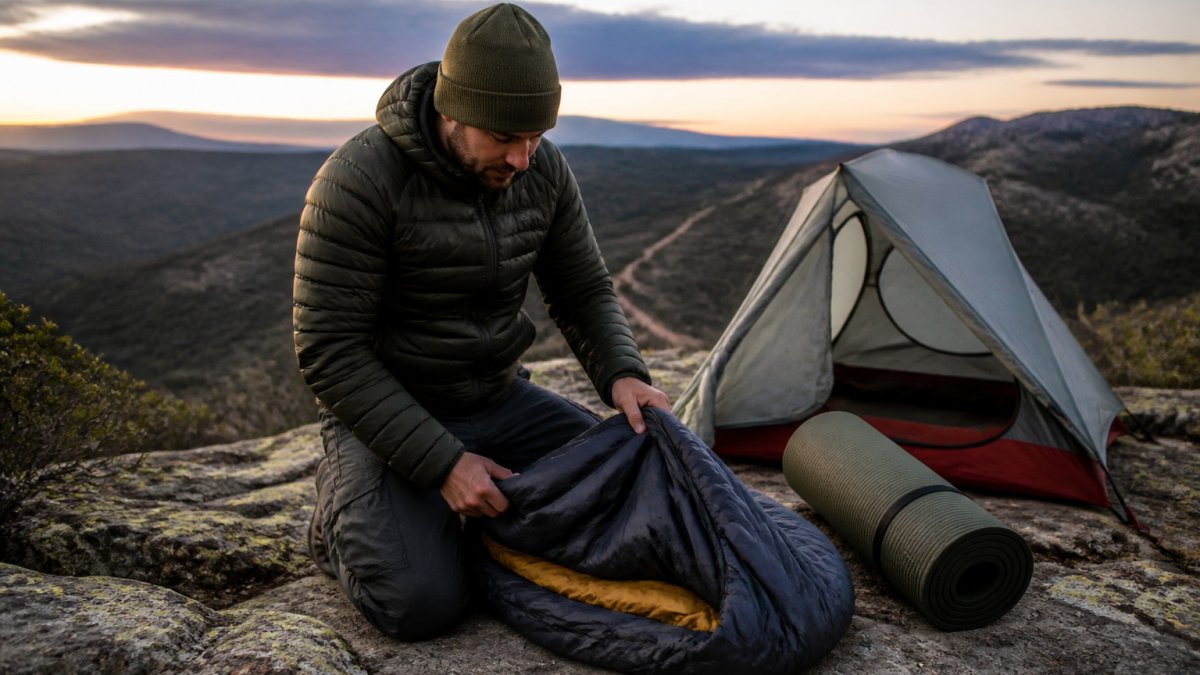
Temperature ratings deserve scrutiny. A bag rated to a comfort limit of 5°C is not the same as one rated to a lower limit of 5°C. The comfort figure is the one that matters for a restful night.
What most guides miss is the mat. A sleeping bag only insulates from above. Without a mat with a decent R-value, cold ground pulls heat out of you all night, no matter how good the bag is.
Pair your bag with a mat rated for the season, not just the bag’s temperature rating. Most people who sleep cold on trips blame the bag when the mat is the real culprit.
Tips for Reducing Base Weight Without Losing Comfort
Base weight is everything in your pack except consumables like food, water and fuel. Cutting it is a process, not a single purchase.
Start by weighing everything you currently carry. Most hikers find two or three items they never use. Then work through the list:
- Replace heavy packaging with resealable bags
- Share group gear like stoves and shelters between walkers
- Choose one multi-use item over two single-purpose ones
- Leave the “just in case” items at home for shorter trips
Comfort is not the enemy of light. A good night’s sleep and warm, dry clothing make you a safer walker. The goal is removing weight you never notice, not stripping out the things that keep you going.
The Big Three: Where Your Savings Actually Come From
Your pack, shelter and sleep system, often called the big three, hold most of your base weight. Trimming these three items delivers far more than shaving grams off cutlery.
A lighter shelter and sleeping system can remove well over a kilogram from your load. That is the difference between a hard day and a manageable one. Focus your budget here first, and only then look at smaller items.
Ultralight Hiking Gear Checklist for Multi-Day Trips
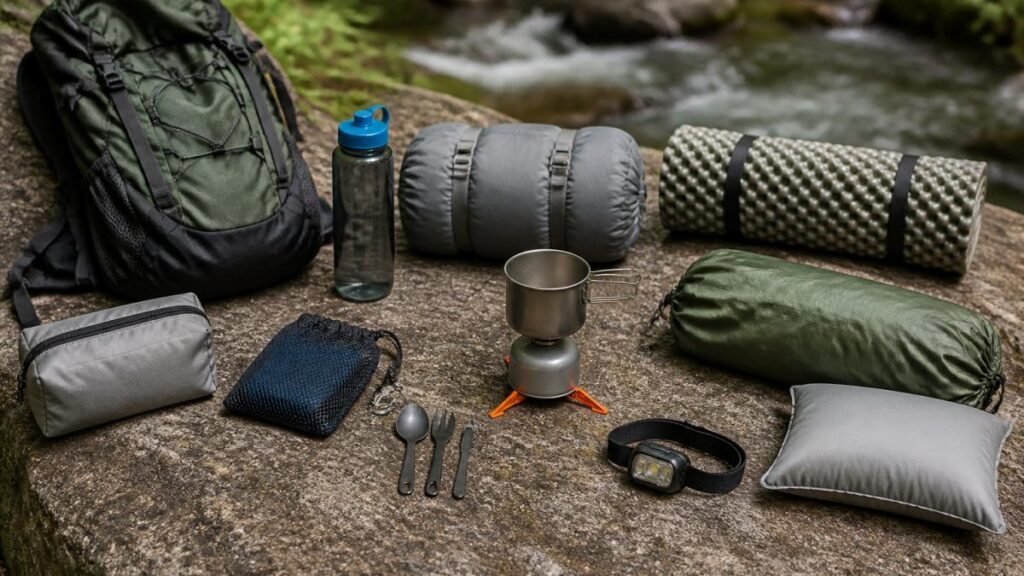
An ultralight hiking gear checklist for multi-day trips covers the essentials without the extras. Pack to this list, then add trip-specific items only when the conditions demand them.
- Backpack, 40-65 litres, fitted to your torso
- Shelter with stakes and guy lines
- Sleeping bag rated for the season
- Sleeping mat with adequate R-value
- Cook system: stove, pot, lighter, backup ignition
- Water bottles or bladder, plus a filter or treatment
- First aid kit and any personal medication
- Head torch with spare batteries
- Weatherproof jacket and warm layer
- Navigation: map, compass, or charged GPS device
- Repair kit: tape, cord, needle and thread
The Geoscience Australia topographic mapping service is a useful place to start when planning a route and deciding what conditions to pack for.
Common Mistakes When Buying Lightweight Camping Gear
The biggest mistake is buying gear for a trip you have not planned yet. Weight targets only make sense once you know your route, season and distance.
Another is trusting a single number. A pack’s weight tells you nothing about how it carries. A sleeping bag’s rating tells you nothing about how it performs when damp. Specs are a starting point, and field conditions are the real test.
A third is replacing everything at once. That is expensive and often leaves you with gear that does not work as a system. Replace your heaviest items first, test them on a short trip, then move to the next.
Buy for the trips you actually take, not the trips you imagine. Gear that suits your real walking style will always outperform gear bought for a hypothetical expedition.
Conclusion: Matching Gear Weight to Your Trip
Getting your load right comes down to matching gear to the trip in front of you, not chasing the lightest number on a page. Buy the big three first, test on shorter walks, and adjust as you learn what you actually use.
At CampNation, we stock carefully selected gear built to last in real outdoor conditions, from essential hiking tools to smart add-ons that make trips smoother. Our premium quality equipment and quick, reliable shipping mean you can gear up with confidence before your next walk.
Get started with CampNation and carry a lighter, more comfortable pack on every trail.
Frequently Asked Questions
What is considered lightweight camping gear?
Lightweight generally means a full pack base weight (everything except food, water and fuel) of roughly 9 to 13 kilograms. Within that, individual items matter: a two-person shelter under 1.5 kg, a sleeping bag under 1 kg, and a pack under 1.5 kg are common benchmarks. Anything below about 4.5 kg base weight is usually called ultralight. The label matters less than whether the total load stays comfortable over the distance you plan to walk.
How do I reduce the weight of my hiking pack?
Start with the big three: your pack, shelter and sleeping system. These account for most of your base weight, so swapping even one item saves more than trimming small accessories. Then weigh everything you carry, remove duplicates, decant toiletries into smaller containers, and leave behind gear you have never used on a trip. Tips for reducing base weight work best when you track numbers rather than guess.
What are the essential items for a lightweight hiking kit?
An ultralight hiking gear checklist typically covers a pack, shelter, sleeping bag and mat, cook system, water treatment, first aid, navigation, lighting, sun protection and a repair kit. Add clothing layers suited to the conditions and enough food for the days between resupply. Everything else is optional. Build the list around the trip, not around what other people carry.
Is ultralight gear worth the extra cost?
It depends on how far and how often you walk. Ultralight gear usually uses lighter fabrics and materials, which cost more and need more care. If you hike long distances regularly, the reduced fatigue is worth it. For shorter overnight trips, mid-weight gear is often the better balance of durability, comfort and price. Buy the lightest gear that still suits your conditions and your budget.